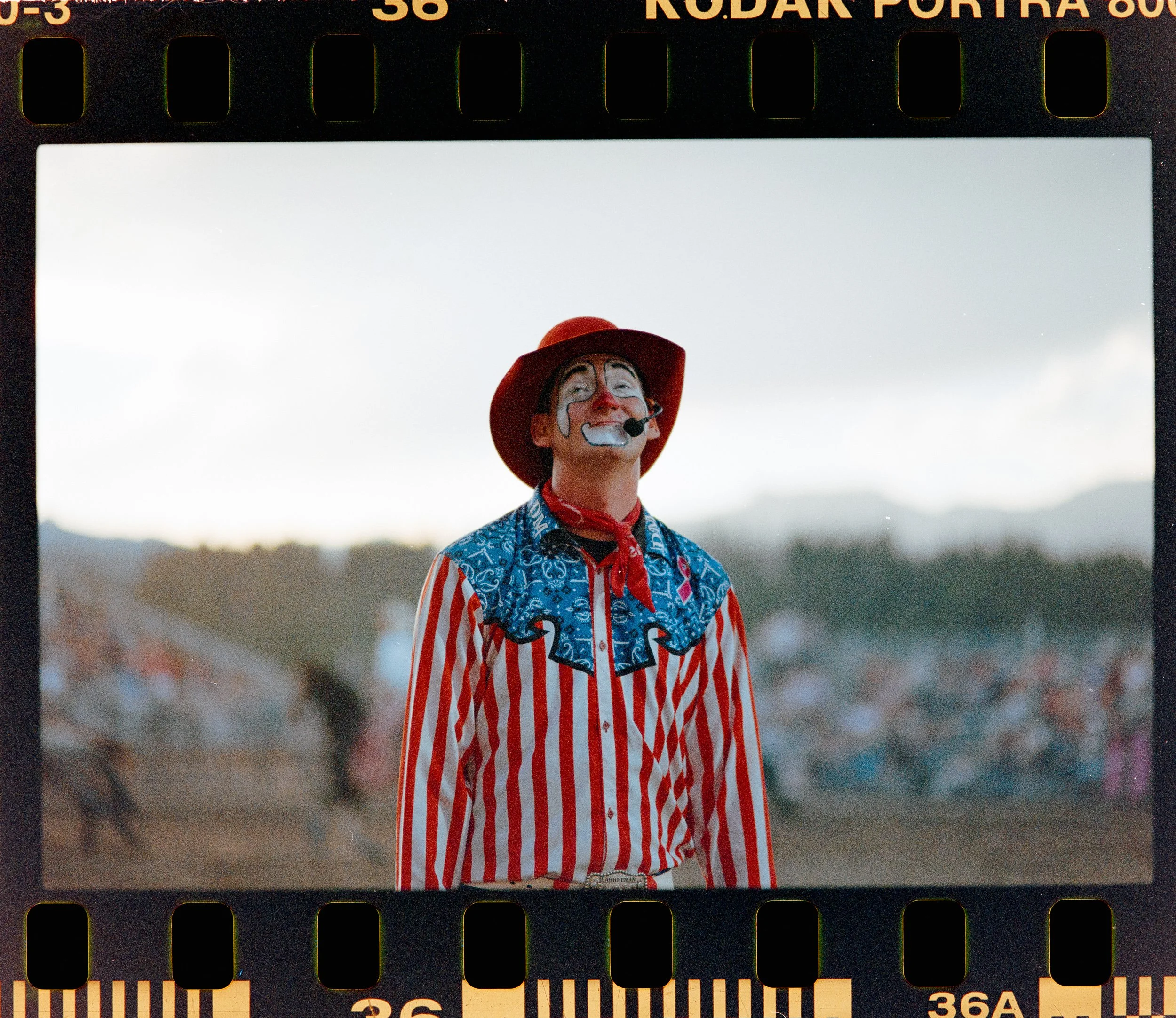
What happens when you deliberately remove the safety net and completely commit to film?
Digital has a safety net. You can see your image right away. You know if you nailed the shot. With burst rates of up to 20 fps and even pre-capture, it's truly hard not to know if you're “nailing” your shots.
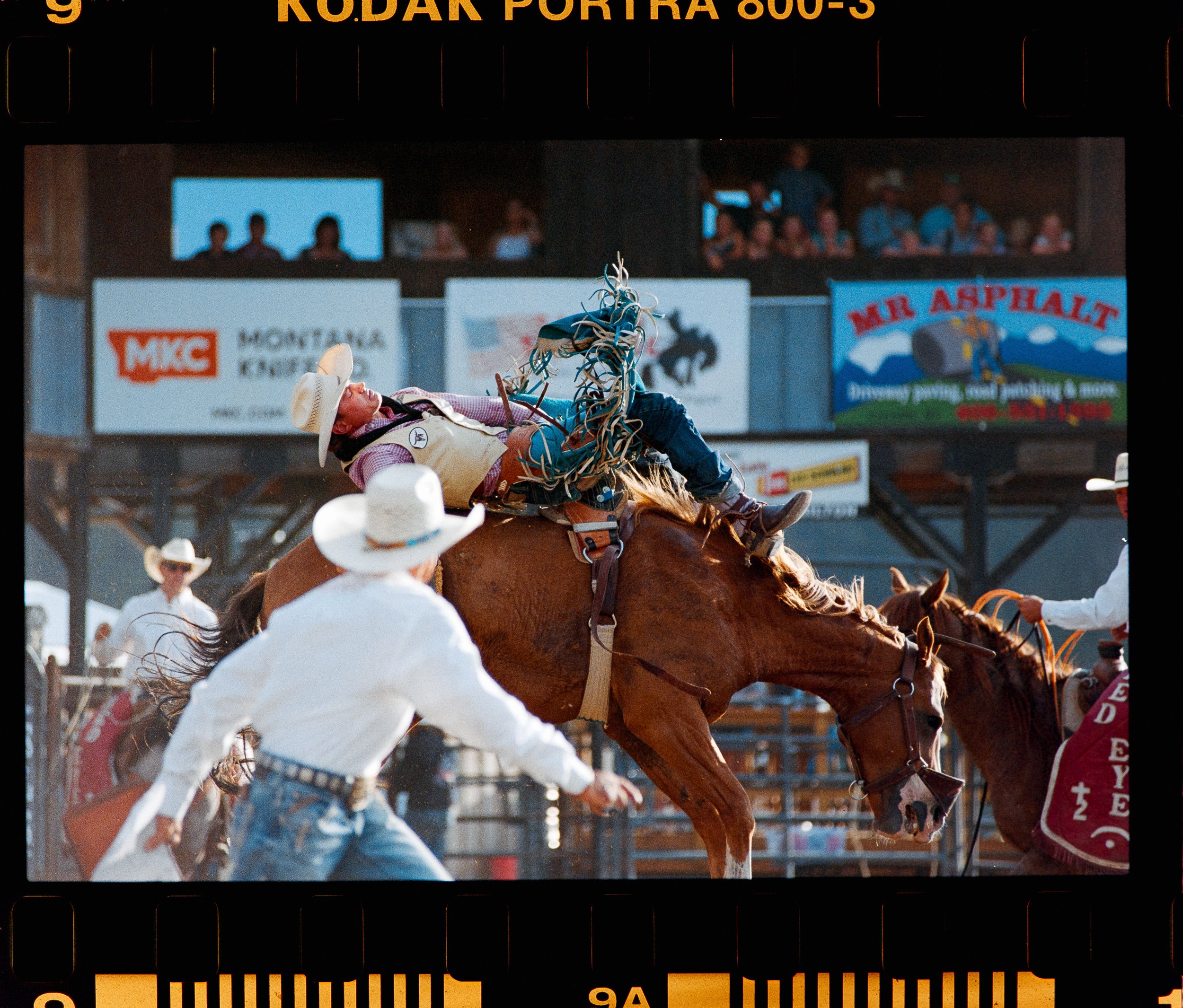
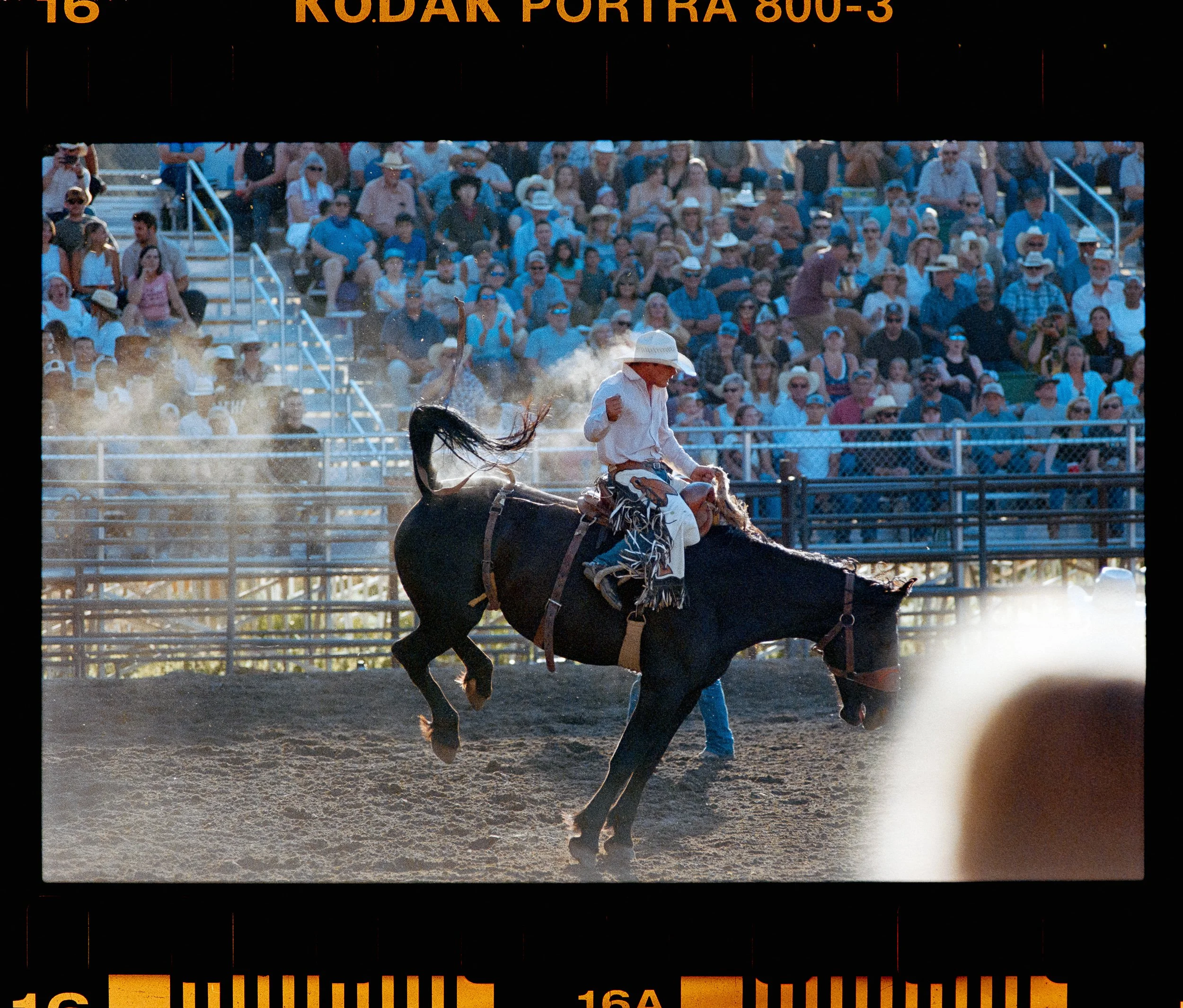
Nikon F100, 80-210 Lens shot on Portra 800.
In July, I had the opportunity to head out to one of our local Montana rodeos and make some images. 99.9% of my clients require me to shoot digital, but for this trip, I wanted to shoot personal work. So, I grabbed the cameras I love the most—a bunch of my film cameras.
A Nikon F3, Nikon F100, Leica M6 and Leica IIIa. And 11 rolls of film.
Here are some of the things I learned when I dedicated myself to shooting a rodeo entirely on film.
1. The First Few Rolls Don't Have to Be Good
I shoot film all the time, so I assumed I would arrive at the rodeo and immediately be in that mindset.
I wasn't.
It took nearly four rolls of film before I stopped photographing the rodeo like I would with a digital camera. It wasn't until my fourth roll that I finally felt like I was getting into a flow.
At first, I felt like I wasn't hitting focus or thinking outside the box. It's so easy to focus only on the action rather than the other elements of the evening. It's easy to grab your longest lens, look for the action and freeze those moments without truly remembering what you were hoping to achieve in the first place.
I felt like I was reacting rather than anticipating. I wasn't looking for other ways I could be creative.
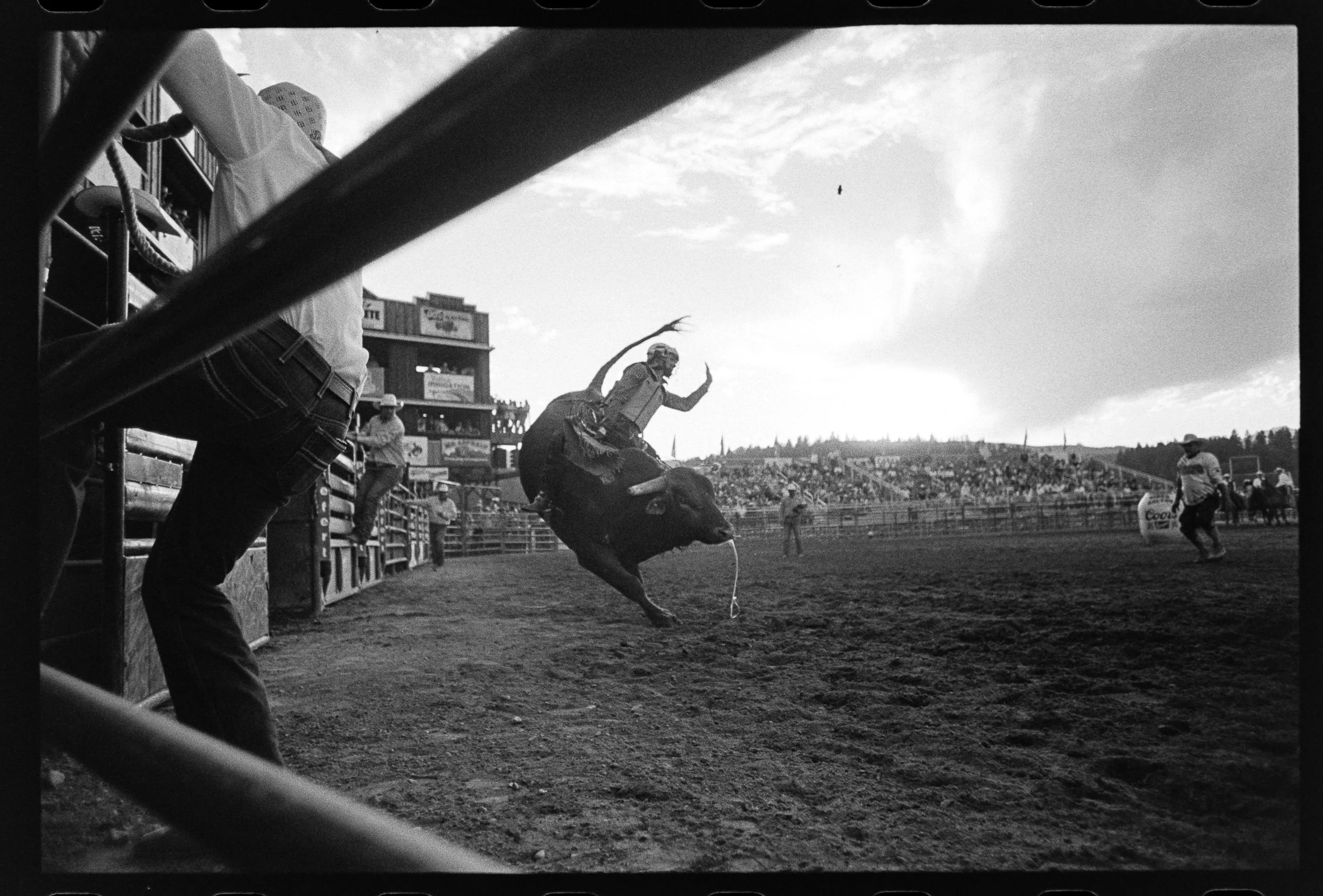
I just missed focus slight with the Nikon F3, this is where having a higher speed ISO film would come in handy and I could of zone focused better.
2. Film Forces You to Anticipate
Anticipation in most sports photography is essential to nailing your shots. In rodeo specifically, you know how things will start, but you don't know much after that.
The rider nods and the chute opens. The bull or bronc will generally come out kicking, but the direction it will go—or what will happen to the rider—is all up to fate. Trying to anticipate the action and setting up your shot beforehand is key.
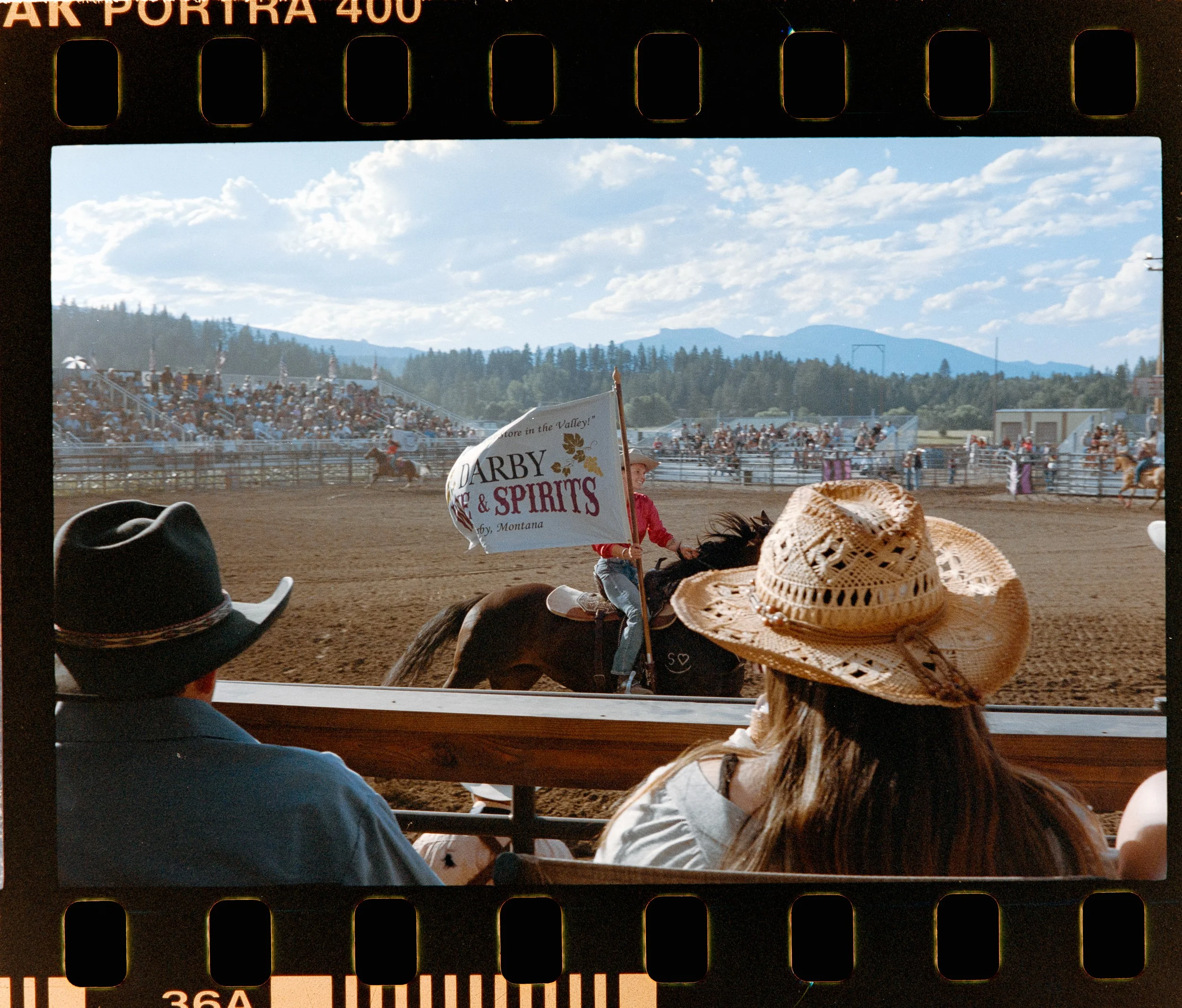
I was using my F100 for a lot of images with a 70-210mm telephoto lens. I found a couple sitting by the railing and thought, If I get a chance to frame any of the action with these two people in the foreground, I'm going to try it.
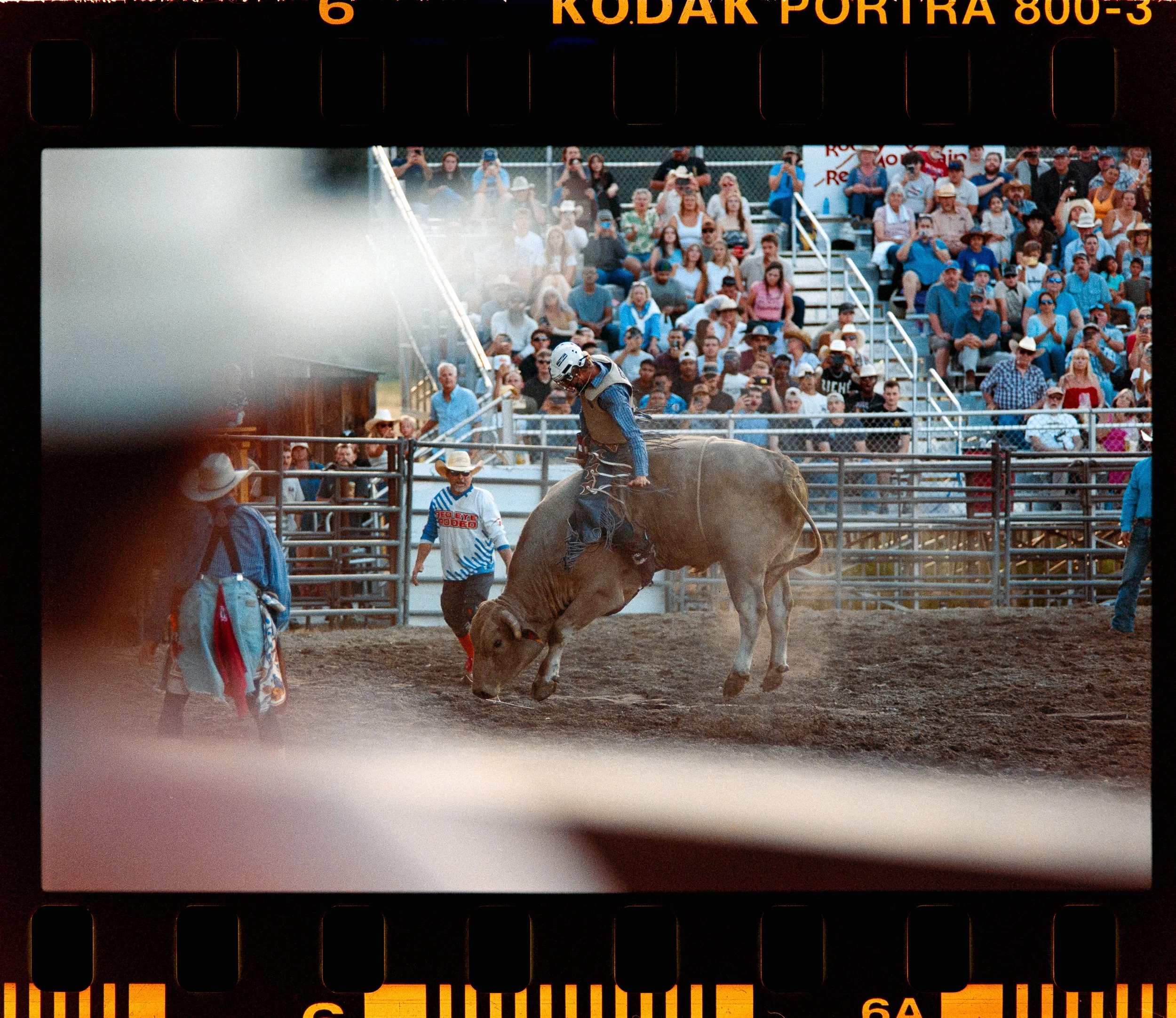
Trying to add some foreground element to the scene in order to change up the look.
Look for and anticipate your shots, especially when shooting film. In the time it takes you to advance to your next frame, you might miss that special moment.
You need to pre-think your shots, and if you're using a manual-focus lens, you can prefocus or zone focus. You need to look for alternative shots, and you need to be aware of where you are on the roll and whether you're getting close to that final frame.
3. Limitations Can Lead You Somewhere Unexpected
I quickly noticed that I needed to have higher-speed film with me. ISO 400 was great at first, but 800 was ideal as the evening went on.
I had Delta 100 loaded in one of my cameras. This film speed was way too slow for most of the action. That limitation made me switch gears and look for something different.
I walked around the venue before the start of the rodeo looking for other photographic opportunities that would work with the slower film. In the end, having Delta 100 with me became an unexpected bonus. It forced me to slow down and look for compositions around the venue rather than focusing only on the action.
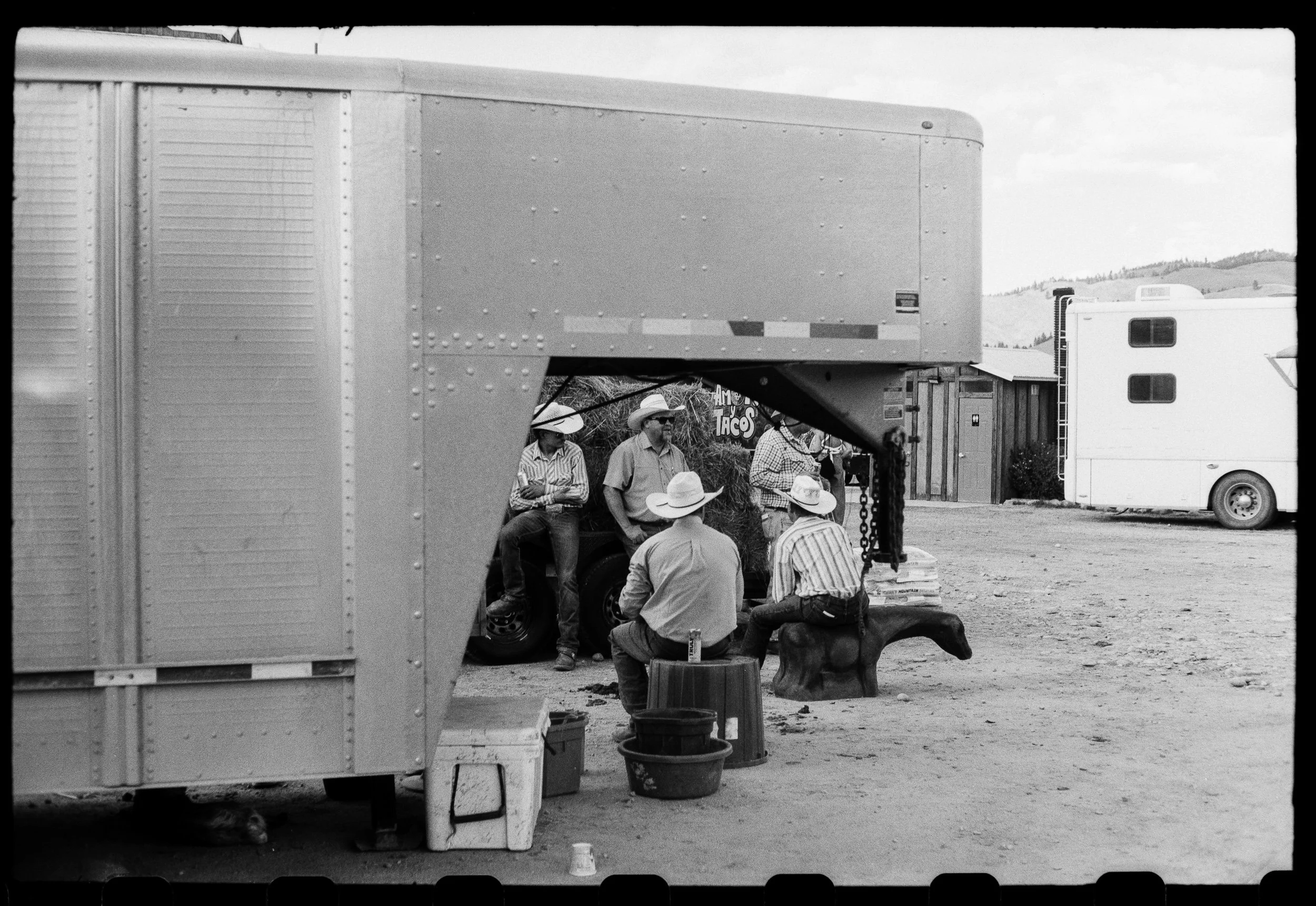
Before the Rodeo starts you will see lots of rodeo people just kinda sitting around waiting. The calm before the storm.
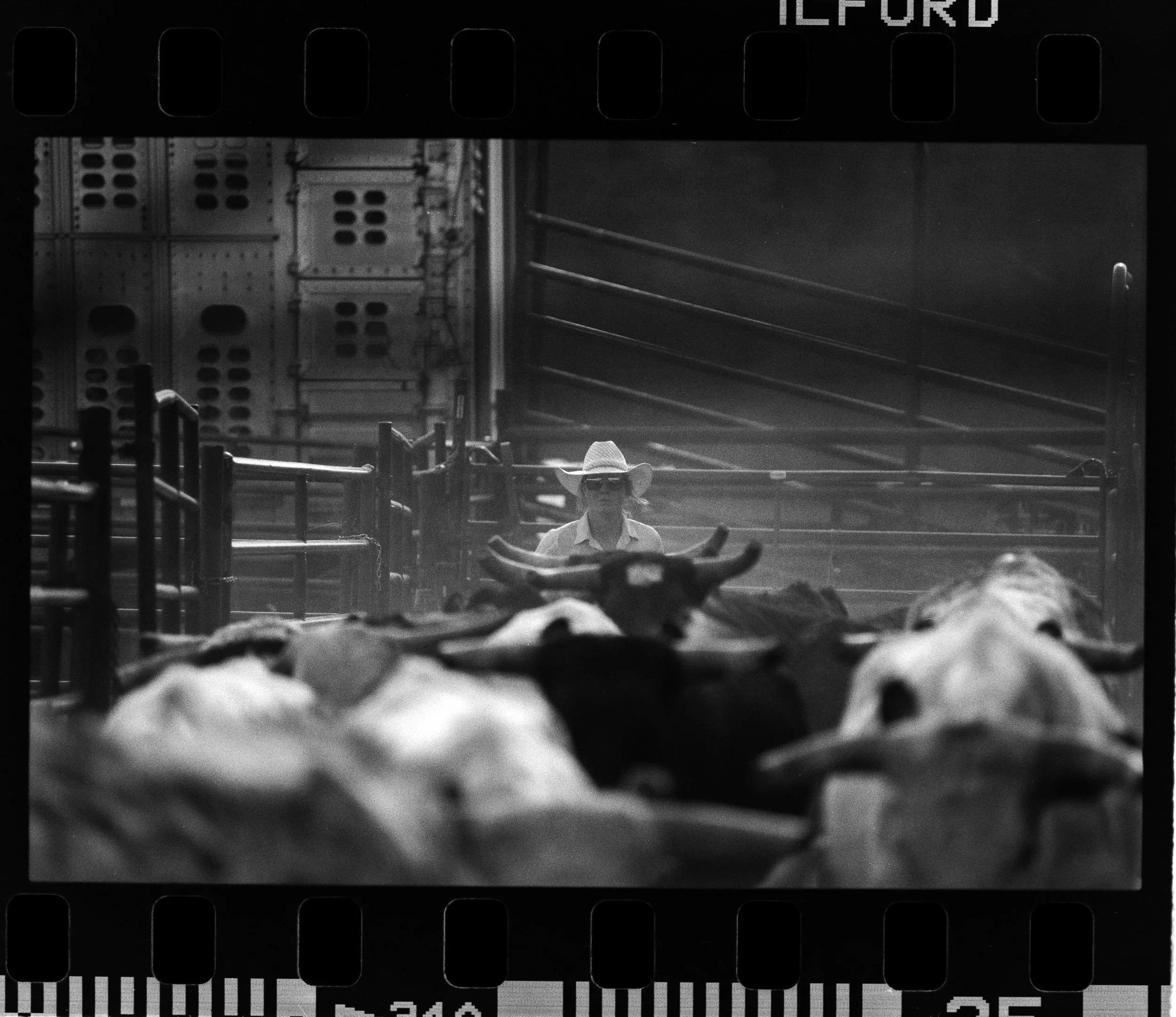
You also only have 36 exposures per roll, so I soon realized that I needed to have my next roll of film ready to go. I needed to know what I wanted to shoot next and where I was on my current roll so I wouldn't find myself changing film in the middle of the action.
4. Four Cameras May Have Created Too Many Decisions
I think next time I would bring fewer cameras. Four was too many. That's probably not a shocking observation, but I felt like I was trying to do too much at first.
I ended up putting the Leica IIIa away after I finished the roll that was in it. From there, I was able to give each remaining camera a specific purpose.
The Leica M6 had color film and a prime 35mm lens. I used this camera by zone focusing and trying to pre-plan my shots.
The Nikon F100 had ISO 800 film in it for most of the rodeo. This was my autofocus camera with a long lens for capturing action.
The Nikon F3 had a 24mm lens, which I used to try to capture wide-angle imagery up close.
Once every camera had a specific purpose, I stopped thinking about which camera to grab.
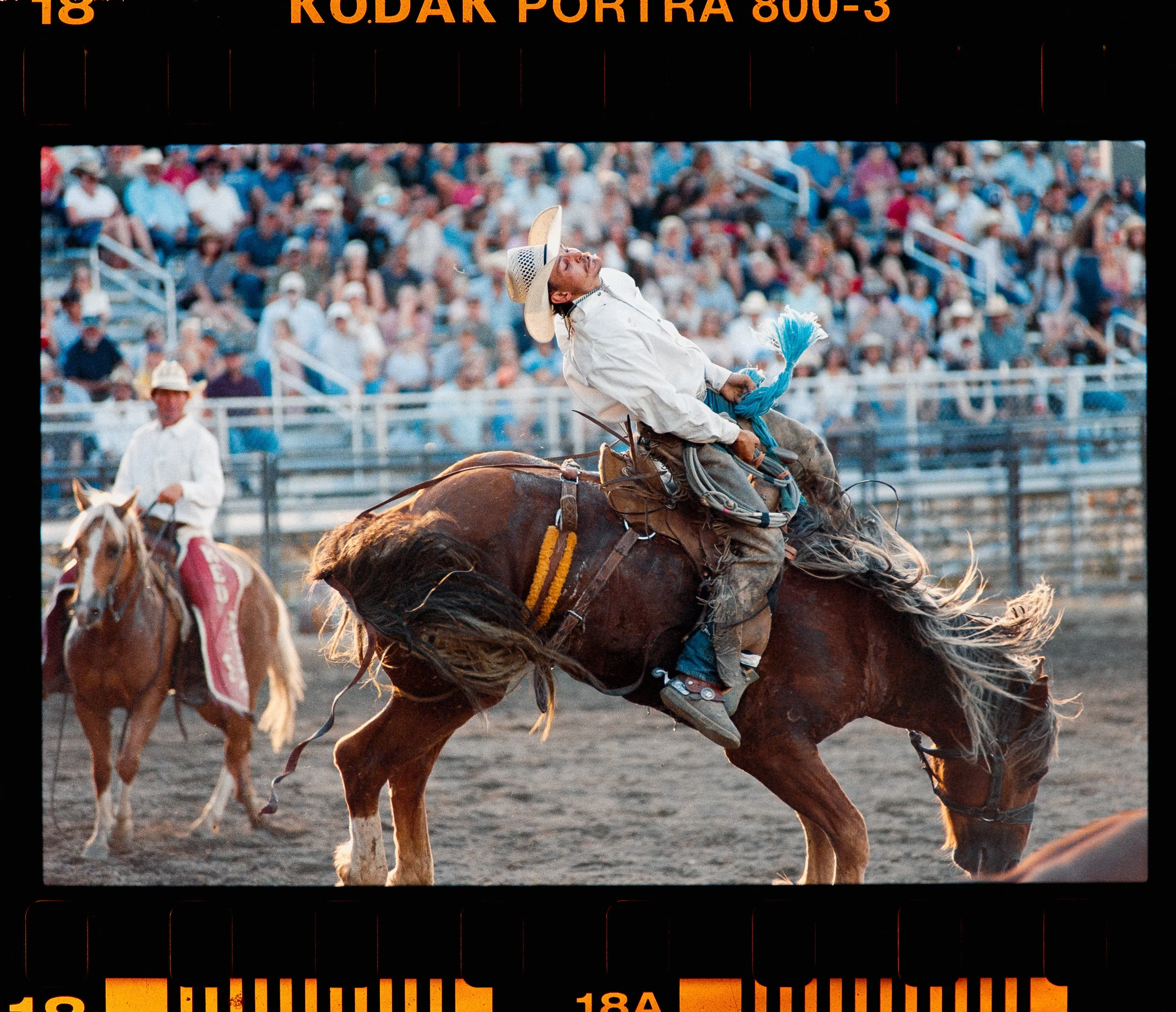
Nikon F100 with a long telephoto lens.
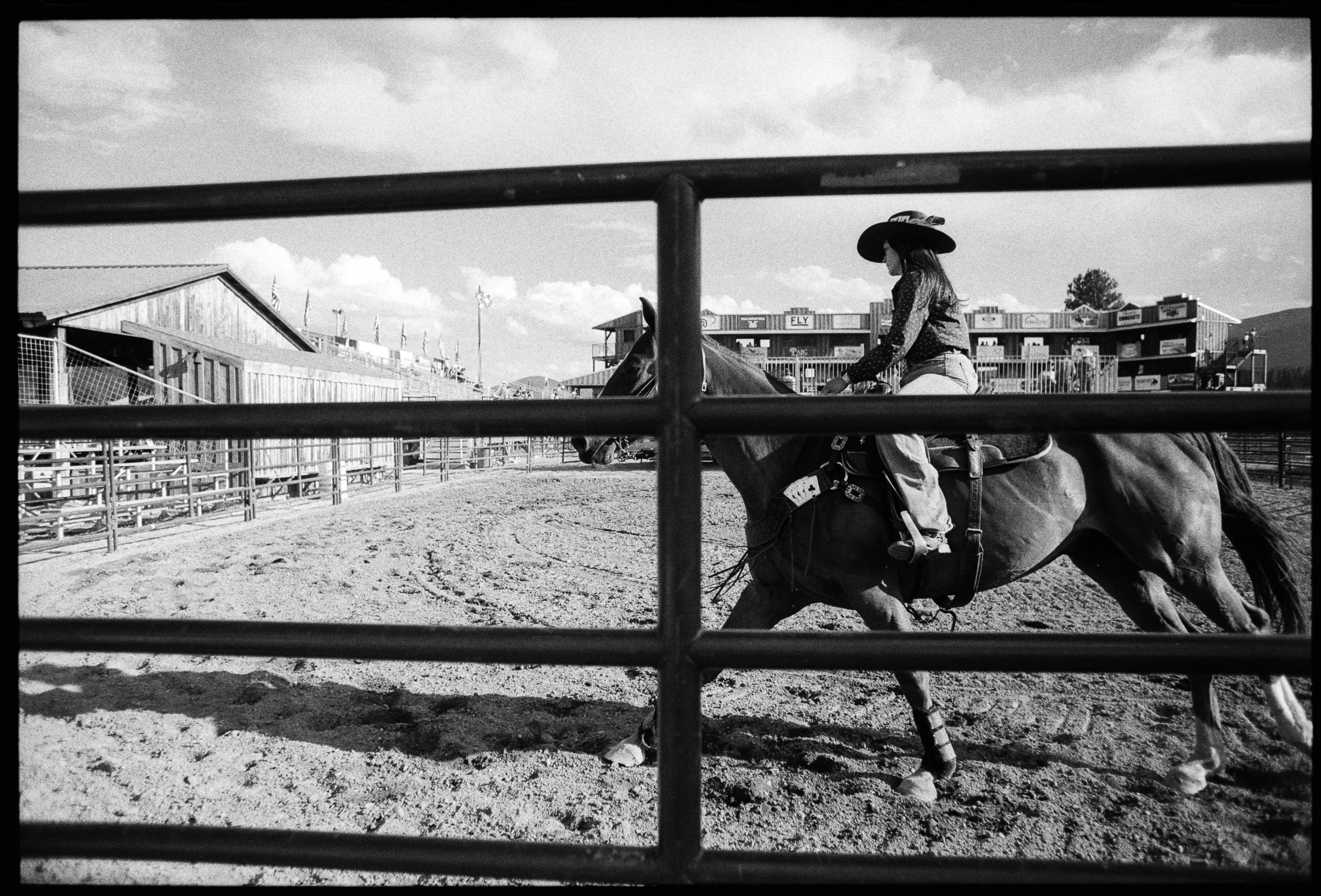
Nikon F3 with a wide 24mm lens. Ilford 100
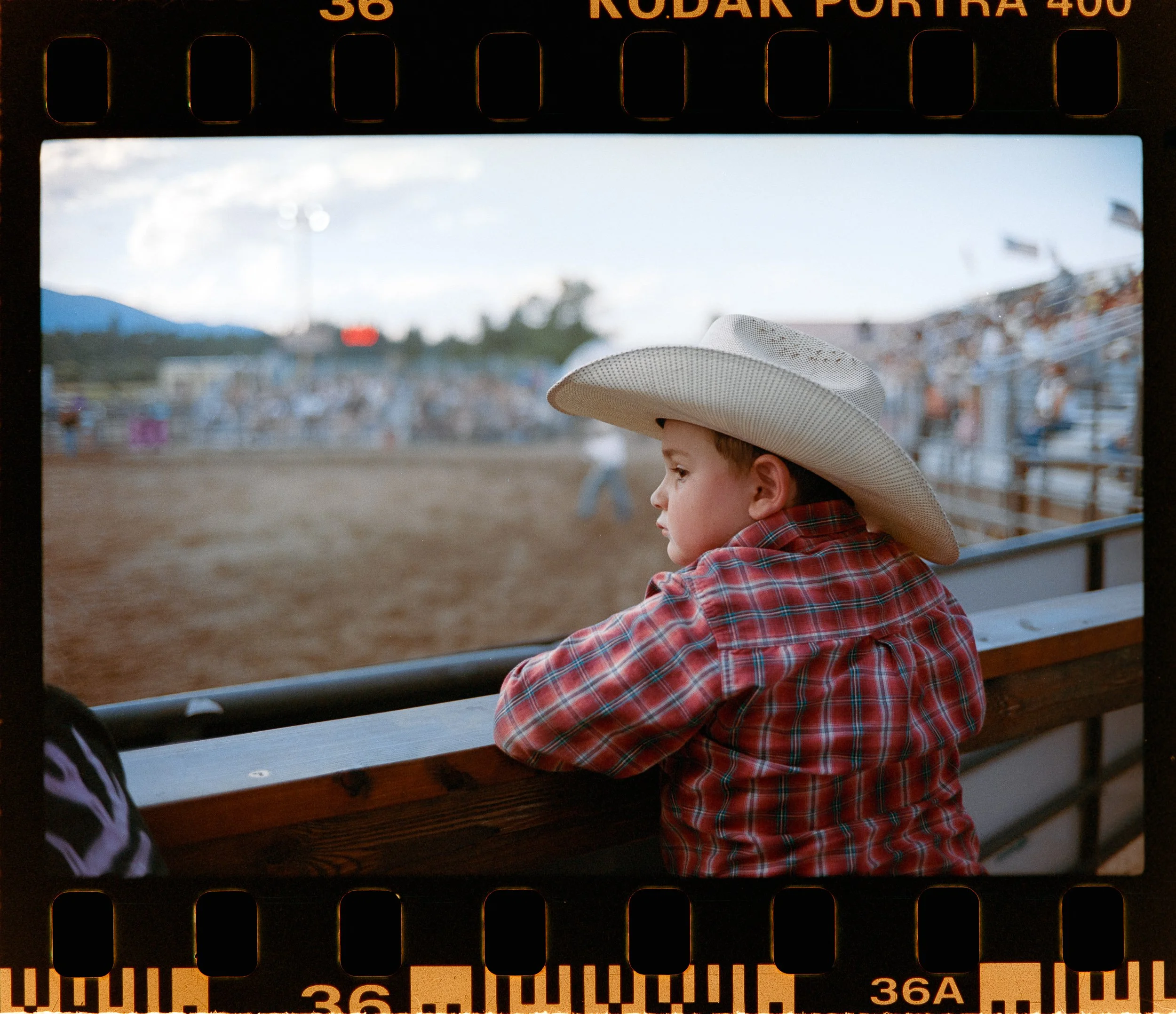
Leica M6, 35mm Lens. Portra 400.
5. Not Every Photograph Needs to Be the Action
It's fun to try to capture images that are outside the norm when it comes to rodeo photography.
Most of the photographers at a rodeo are focused on one thing: the action. That's their job. They need to freeze the action and capture those epic moments.
But my goal was completely different.
Of course, I photographed some of the action, but I wanted to tell a bigger story. I wanted to photograph the rodeo and capture what it felt like to be there.
It's the spectators, the dust, the clothing, the horses waiting, people leaning against fences, the signs, the arena—and, of course, the action.
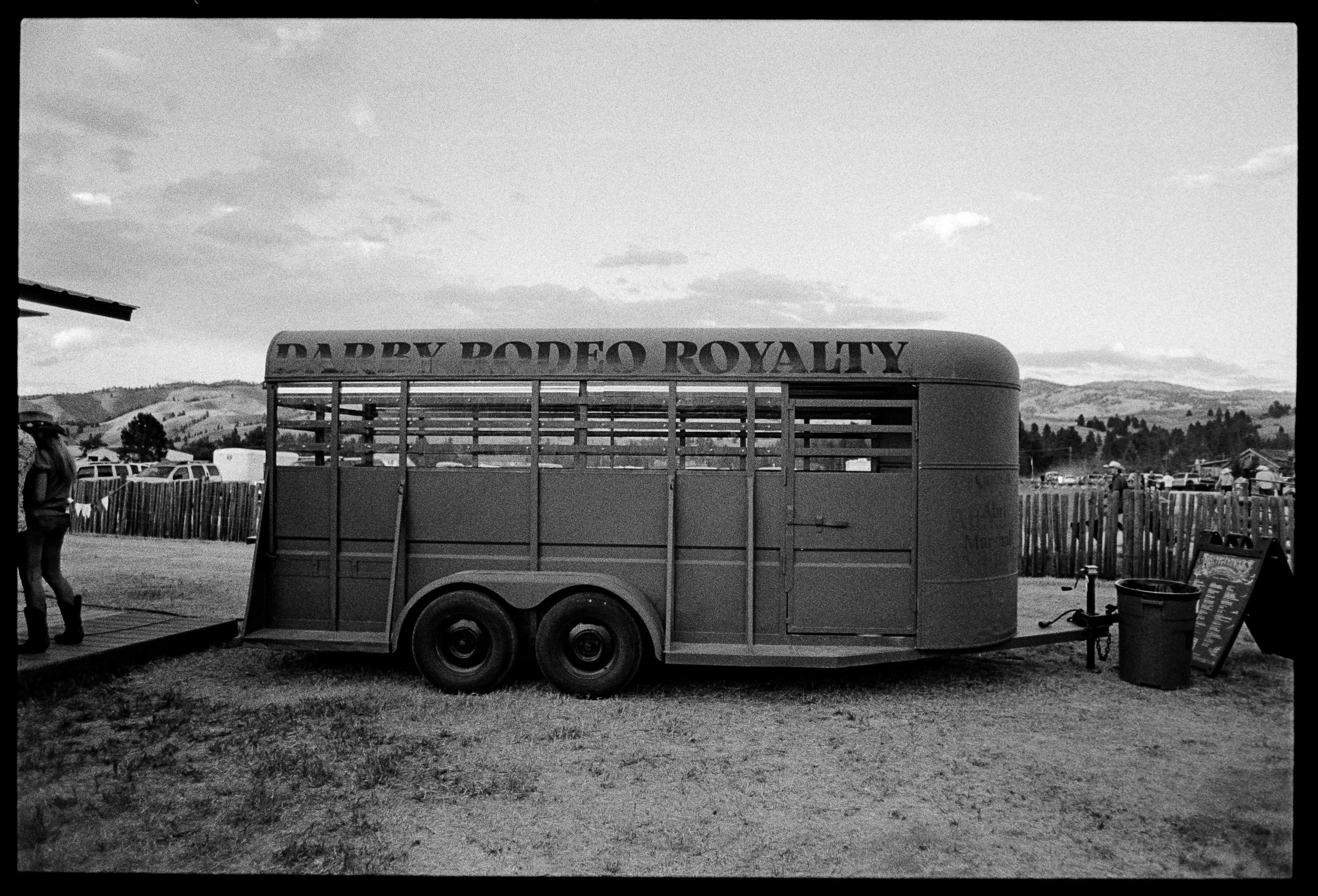
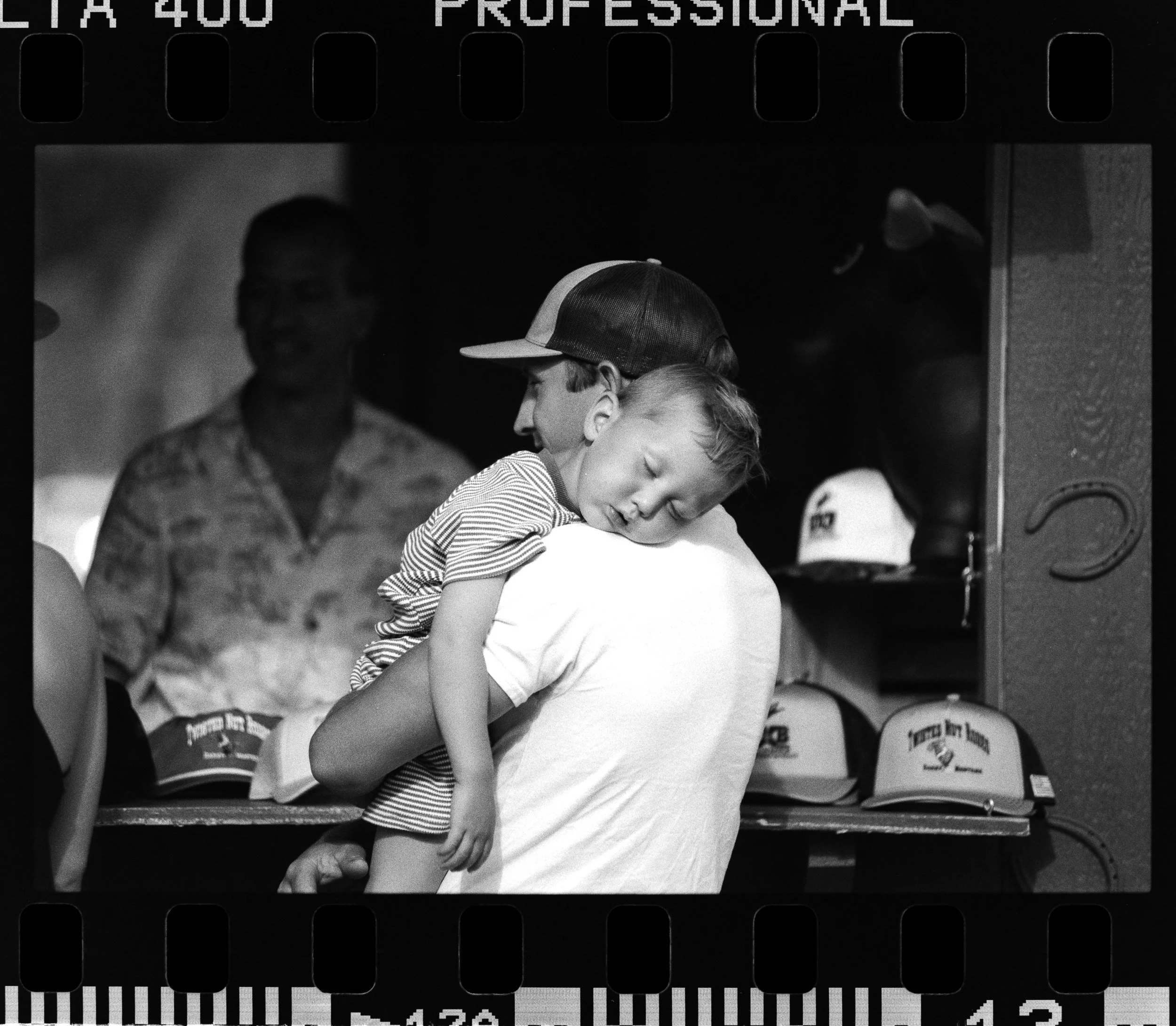
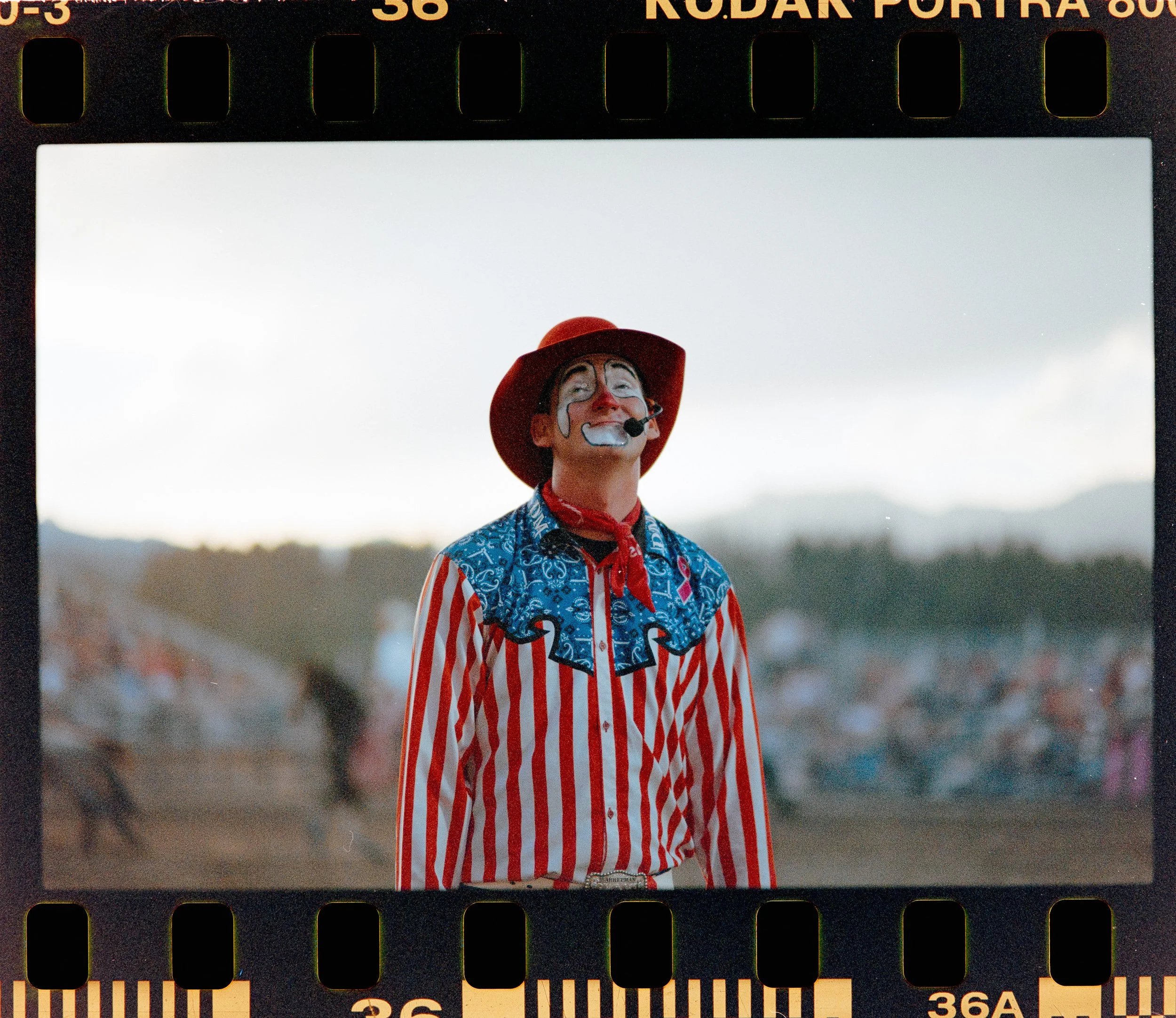
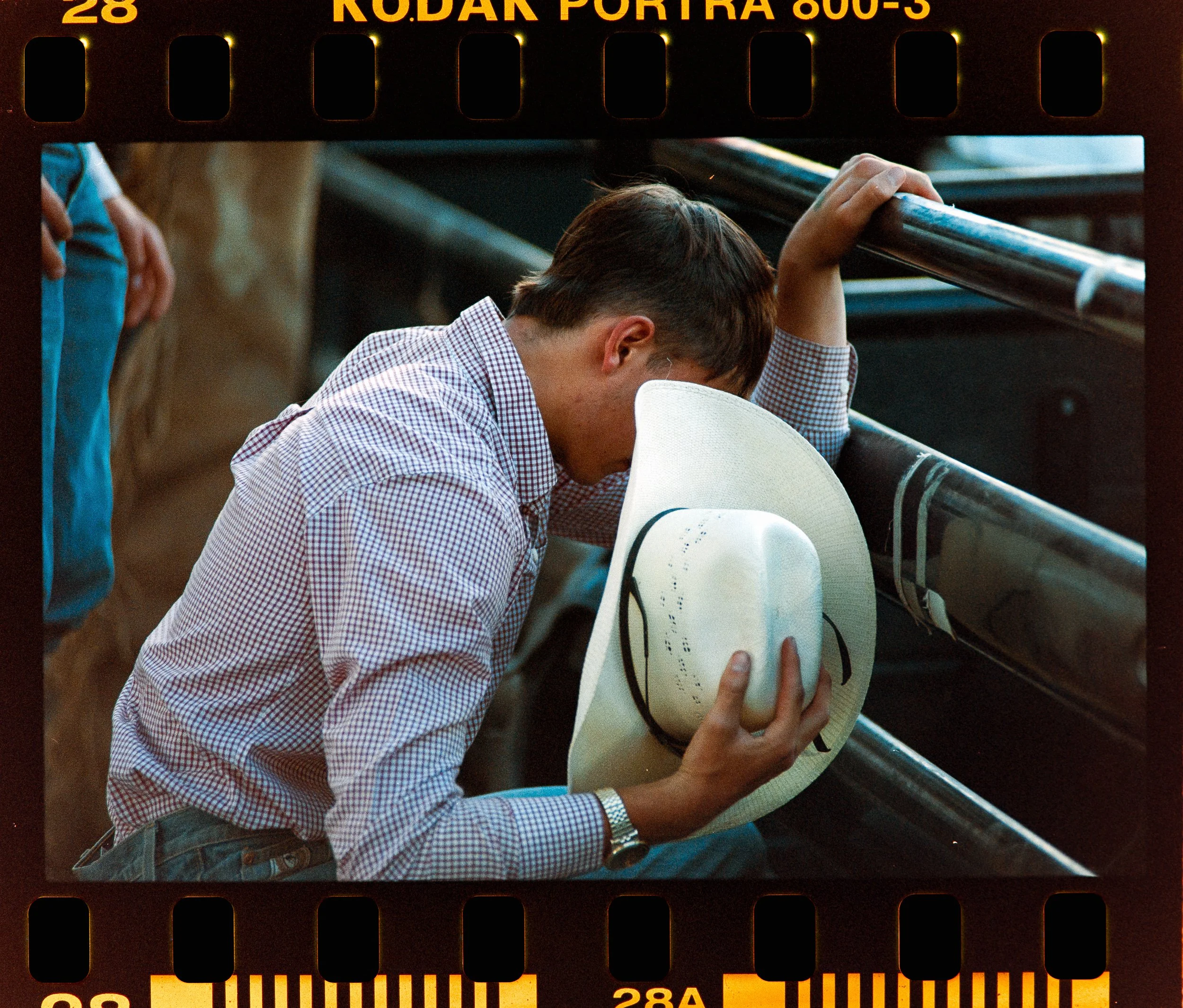
I still feel like I was only scratching the surface of what I was trying to do. Once I got into that flow state, I started to become more creative. I tried slower shutter-speed drags and looked for different compositions.
As the evening went on, I also became more confident and put fewer boundaries on myself when photographing people in the crowd.
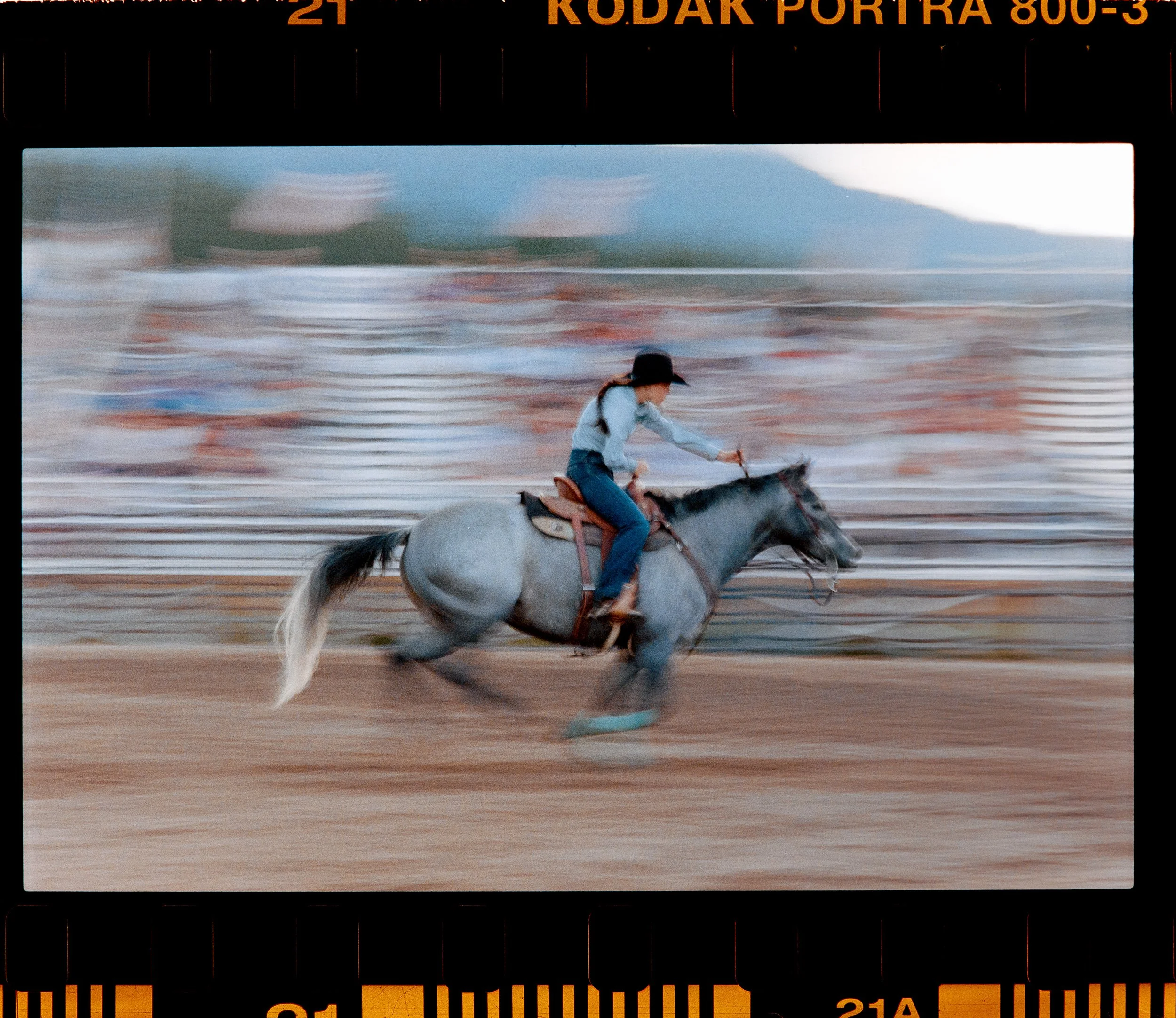
Experimenting with Slow shutter speeds.
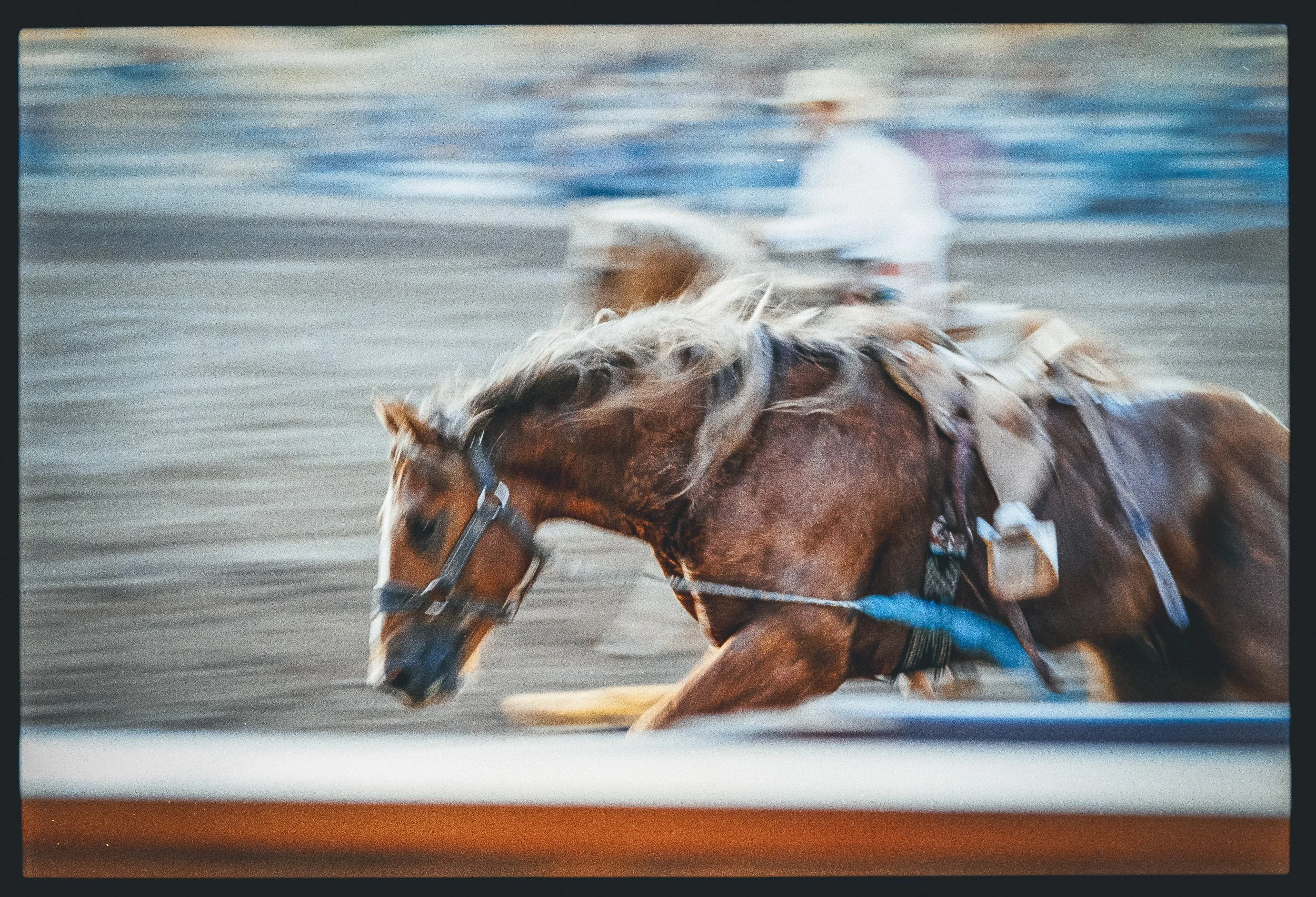
Slowing the shutter down and tracking the subject.
Final Thoughts
I felt a bit of a contradiction in my brain at times.
Everything about film is restrictive. The cost of film, the fixed ISO, the 36 exposures and the manual-focus cameras I had with me.
But once I settled in and decided not to worry about the cost of film or all the other possible barriers, I found myself entering a flow state.
I was shooting freely, but with more intention, anticipating, looking and planning out my shots. I was searching for alternative compositions and trying my best to see the rodeo differently.
I told myself beforehand:
Don't worry about the cost of the film. Just commit yourself to shooting. Feel free with it.
There is something incredibly special about letting go of those worries and just going for it.
So, what happens when you deliberately remove the safety net and completely commit to film?
Eventually, you stop thinking about the safety net and start focusing on your craft.
And I can't wait to put myself in that position again.