
In the middle of July, I decided to embark upon a small-town flea market in Wisdom, Montana. It happens once a year in this tiny town in the middle of the Big Hole Valley, nestled up at around 6,500 feet.
Wisdom has a handful of streets, no stoplights, and plenty of dirt roads. It's not uncommon to see someone's horse tied up outside the local bar, or for the Fourth of July parade to include a very large cow being paraded down Main Street.
Once a year, the town also plays host to a "Guns & Flea Market Show"—pretty much a town-wide sale featuring a little bit of everything.
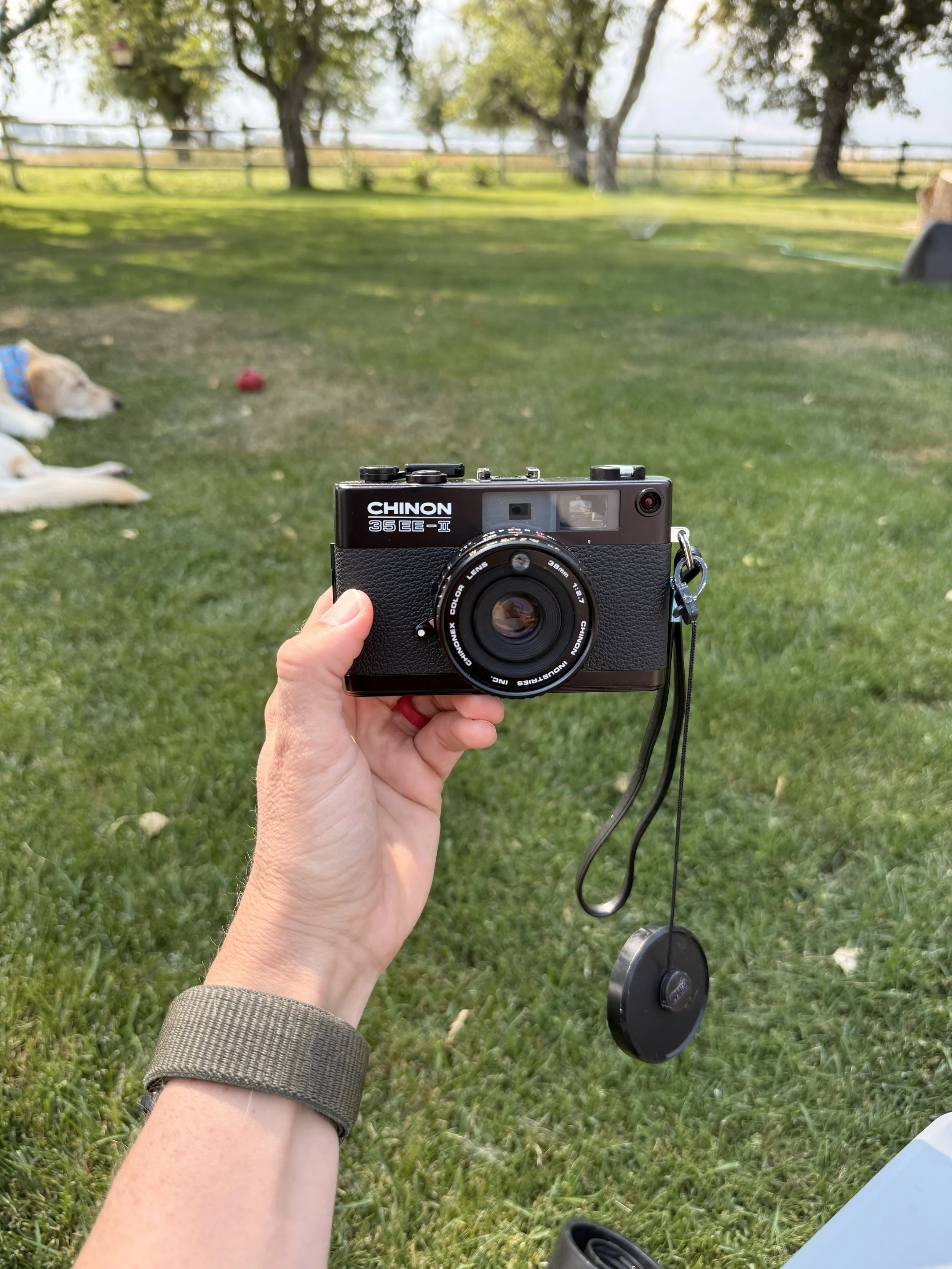
As per usual, I'm always on the hunt for a film camera. I wander through the different vendors, keeping a keen eye out for anything interesting.
This year, I stopped at one vendor's table where he had an entire box full of cameras. Most were basic point-and-shoots, but one caught my eye.
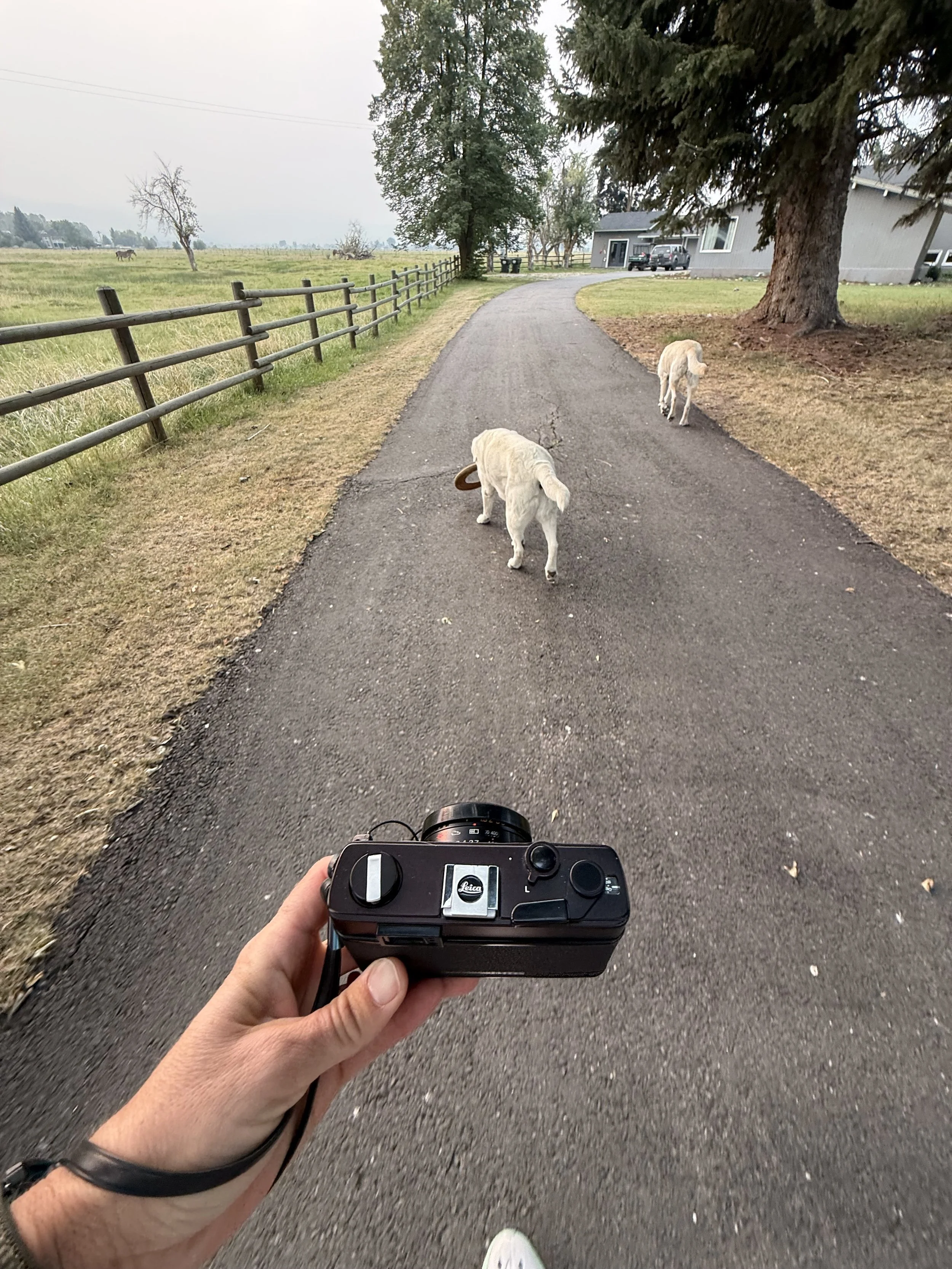
I picked up a nearly perfect-looking Chinon 35EE-II.
It's a small rangefinder-style camera with a 38mm f/2.7 lens. Made in Japan in the 1970s, it was marketed as a compact automatic rangefinder. There aren't many controls. There aren't many decisions to make. It's basically designed to do the thinking for you.
I did my usual inspection—the same kind of inspection I talked about in my blog on what to look for when buying a used film camera. I fired the shutter, checked the inside, opened the battery compartment and looked over everything I could.
It all seemed good.
There was just one problem, and with this particular camera it was an important one: I didn't have the two batteries needed to test the meter.
There isn't really a manual mode to fall back on. The camera relies heavily on its automatic exposure system, so without batteries I couldn't know whether that part of the camera worked.
The price was good: $40. You can find some of these Chinon models online for even less, but this one was sitting in front of me, looked great, and I decided to take a chance.
I brought it home, ordered some batteries and figured I'd run a few test rolls through it.
You Are Always Learning in Photography
I've been a professional photographer for a long time, and one thing I firmly believe is that you are never done learning.
In fact, if you ever get to the point where you think you know everything or have all the answers, you probably don't.
This little $40 camera was about to remind me of that.
The calamity that ensued while trying to figure it out was both humbling and, looking back, pretty funny. But it also reminded me of a few things:
It's okay to take a chance.
Sometimes you completely miss the obvious.
And when in doubt, K.I.S.S.—Keep It Simple, Stupid.
Take the Chance
Buying this camera was a bit of a gamble because I didn't know much about it.
Information was surprisingly hard to find. I found one slightly pathetic instruction manual online and a couple of write-ups. There weren't endless YouTube tutorials showing me exactly what every button did or videos from people who had already struggled through the same problems.
That's generally how I figure out old cameras: I go online and benefit from someone else's trial and error.
This time, I was going to have to do a little more of that trial and error myself.
But that's also part of the fun.
The first step was simply taking the chance. Sometimes you won't know until you go for it.
Sometimes You Miss the Obvious
I got home and annoyingly discovered I had to special-order two batteries for the camera. They weren't exactly obscure, but they also weren't something I could grab at my local store.
Once they arrived, I popped them in.
Success!
The three little red and green lights next to the rangefinder window came on when I half-pressed the shutter. The camera fired. I could see the shutter speeds changing.
Everything appeared to be working.
Perfect, I thought.
The only problem was that I still had no idea whether the meter was actually accurate.
So, I did what any reasonable film photographer does when faced with an unknown 50-year-old camera.
I put a roll of film in it and went for a photo walk.
Let's just say the first roll didn't exactly go according to plan.
I learned that the light seals needed replacing.
I wasn't paying enough attention to the over- and underexposure warning lights.
And then there was my favorite discovery: the hot-shoe cover.
I had put a little hot-shoe cover on the camera. Thought it made the camera look cool. What I didn't realize was that doing so made the camera think a flash was attached, causing it to fire at a preset flash shutter speed instead of exposing normally.
Of all the complicated problems I had imagined this old camera might have, I had essentially created one myself by putting a tiny piece of plastic on top of it.
Remember K.I.S.S.?
It turns out this camera wasn't overly complicated.
I was overcomplicating it.
Focus. Half-press the shutter. Look at the tiny exposure lights. Take the photograph.
That's pretty much it.
The Failure Roll
The first test roll was terrible.
I somehow managed two double exposures. Countless frames were almost completely black and unrecoverable. There were light leaks. There were mistakes.
It was a mess.
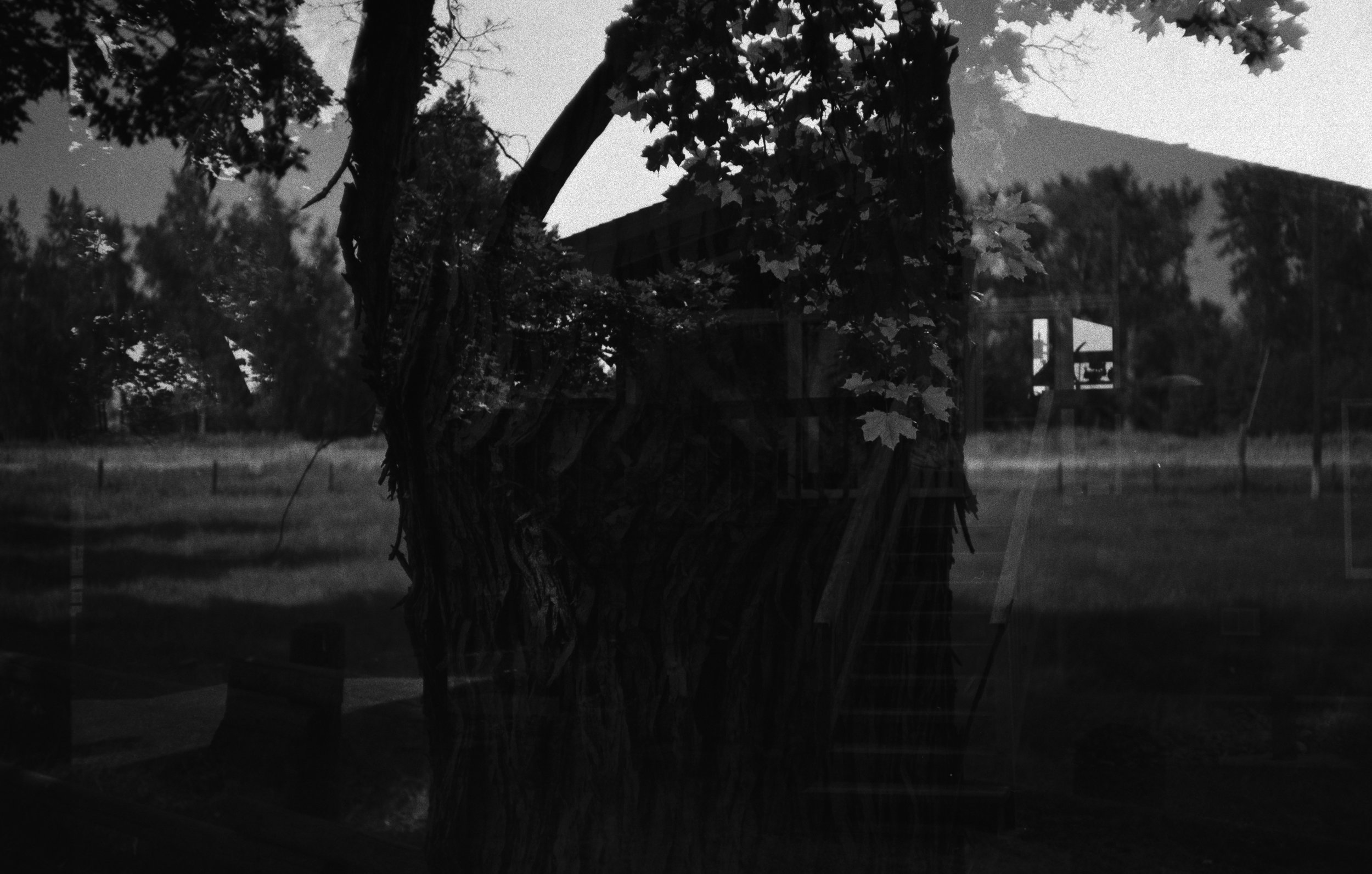
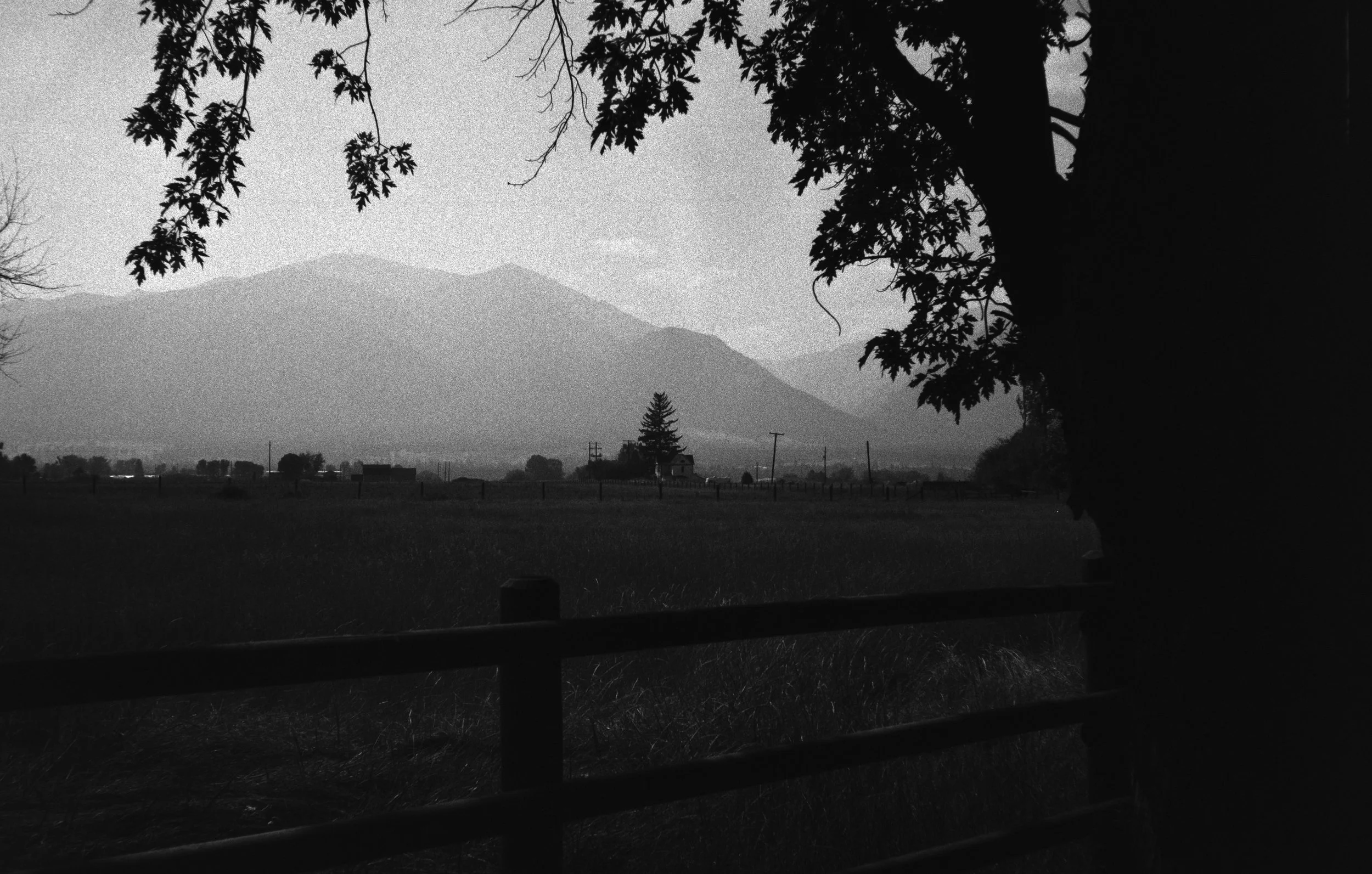
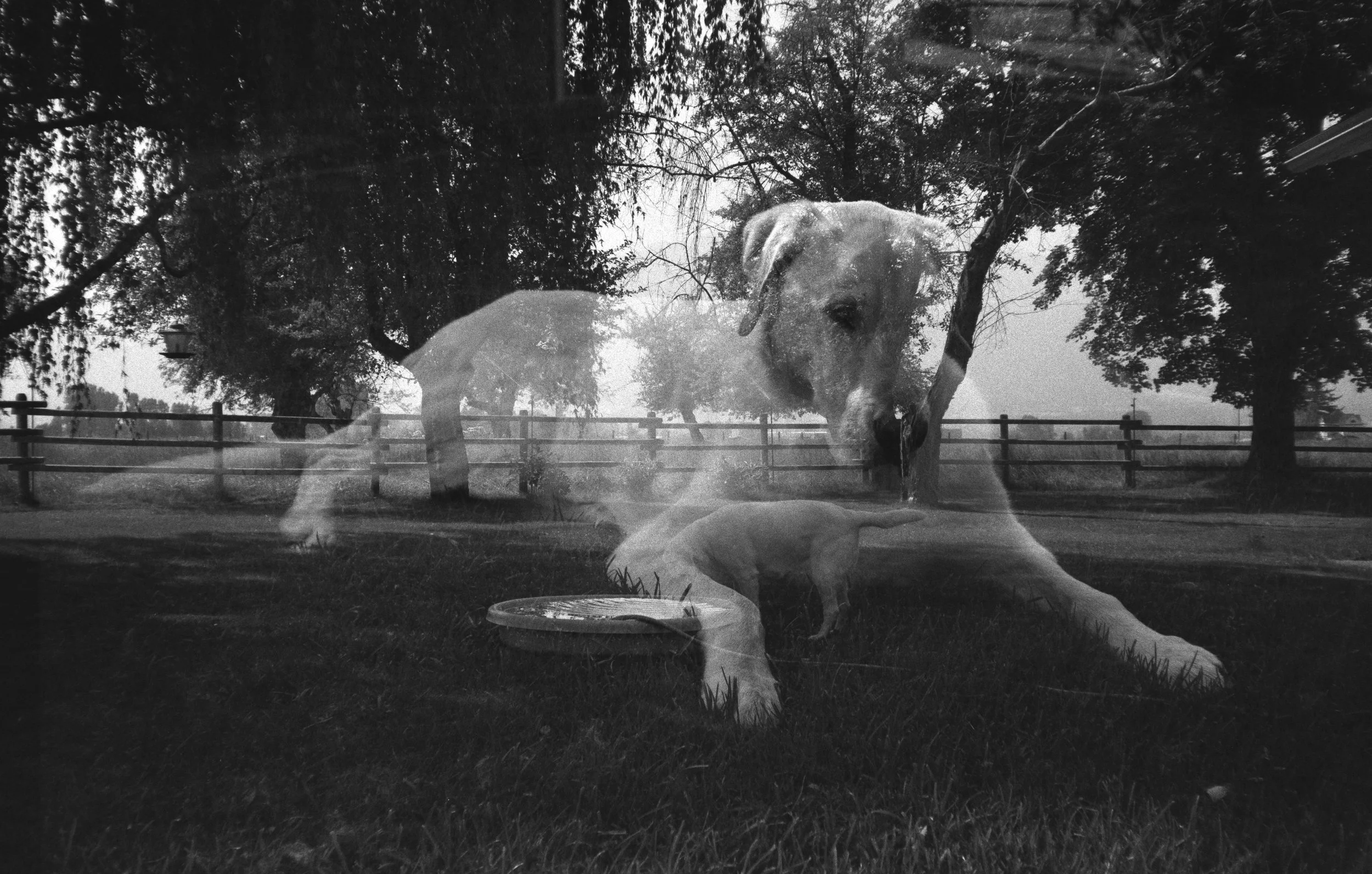
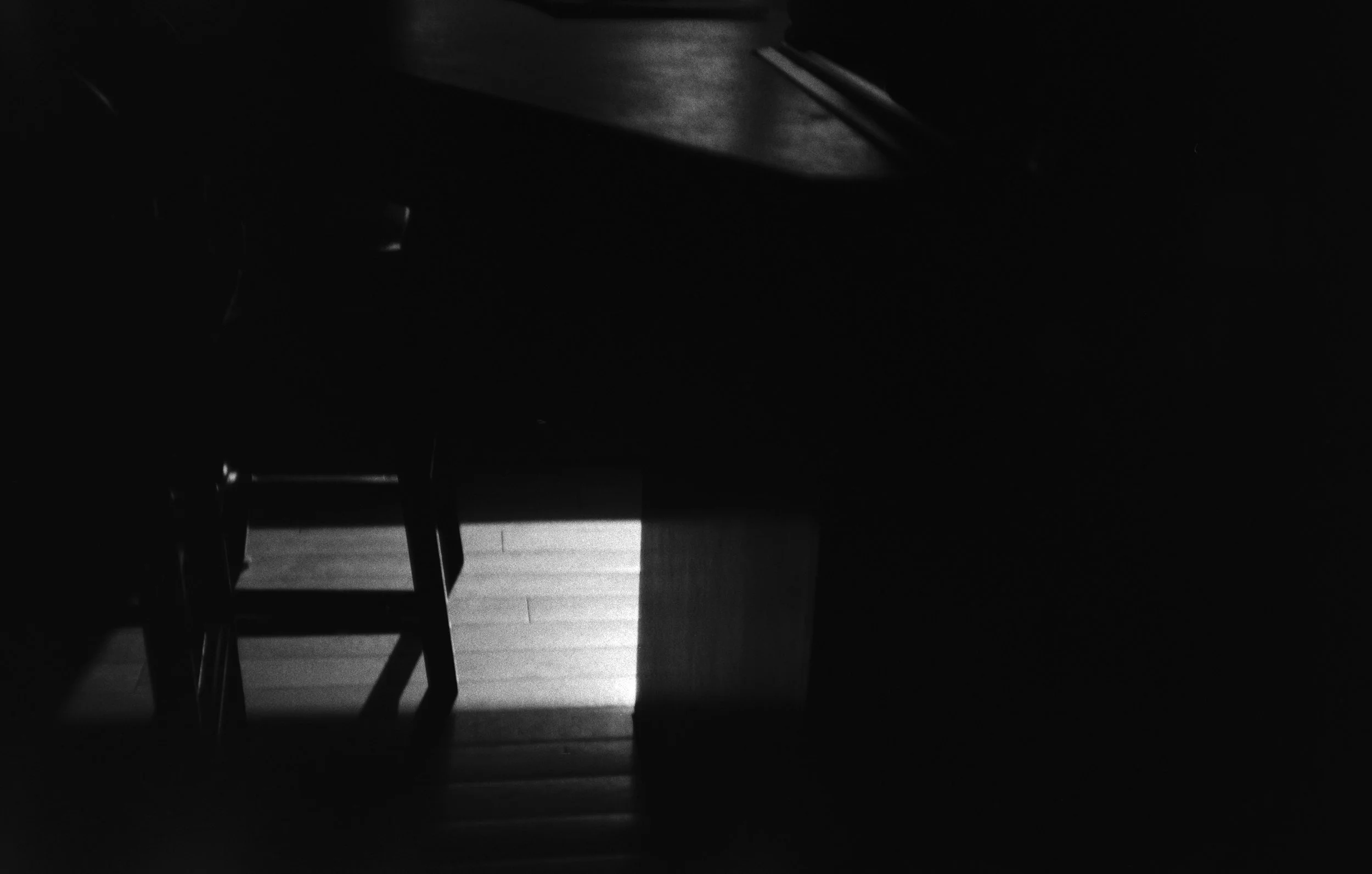
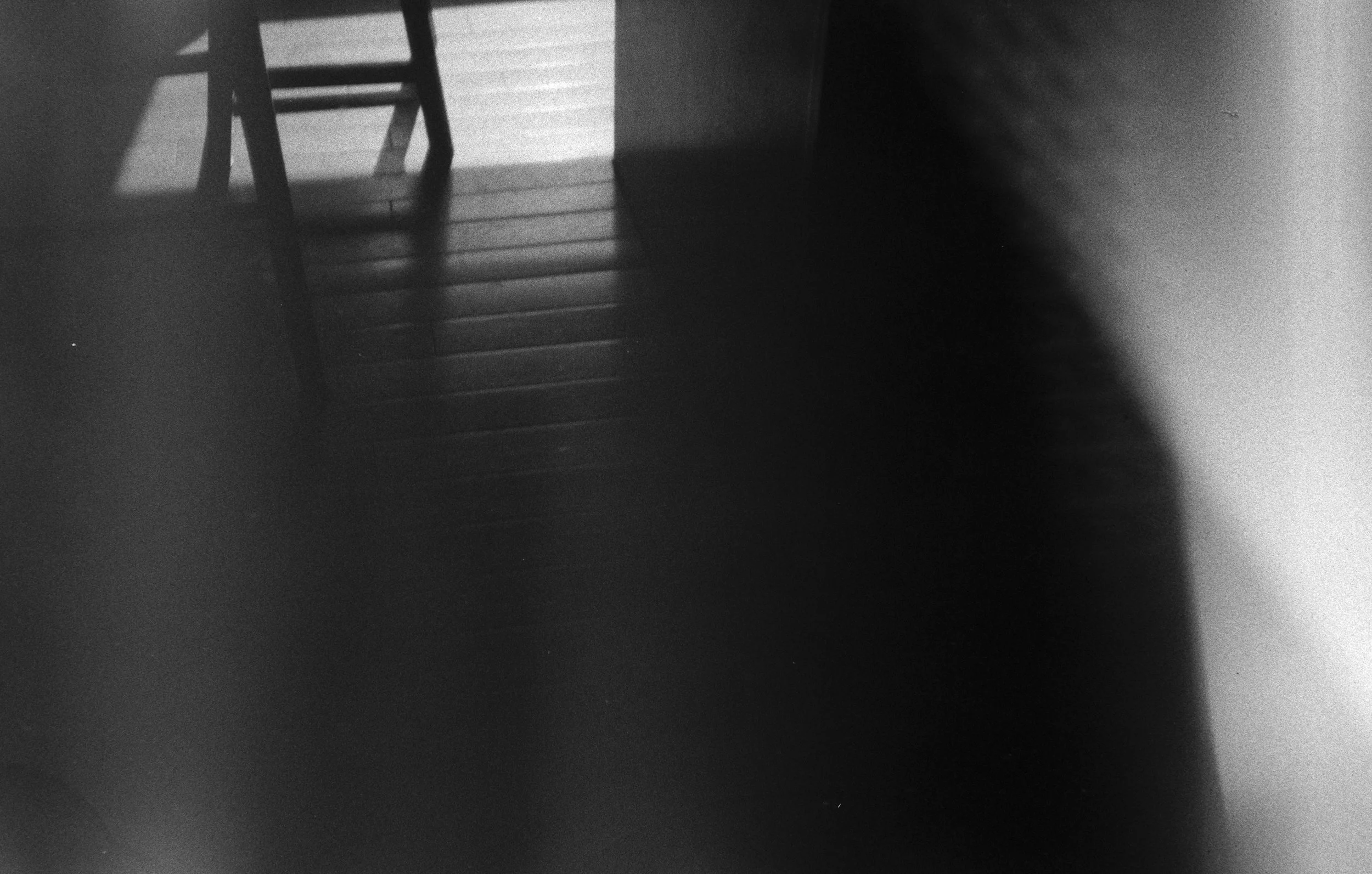

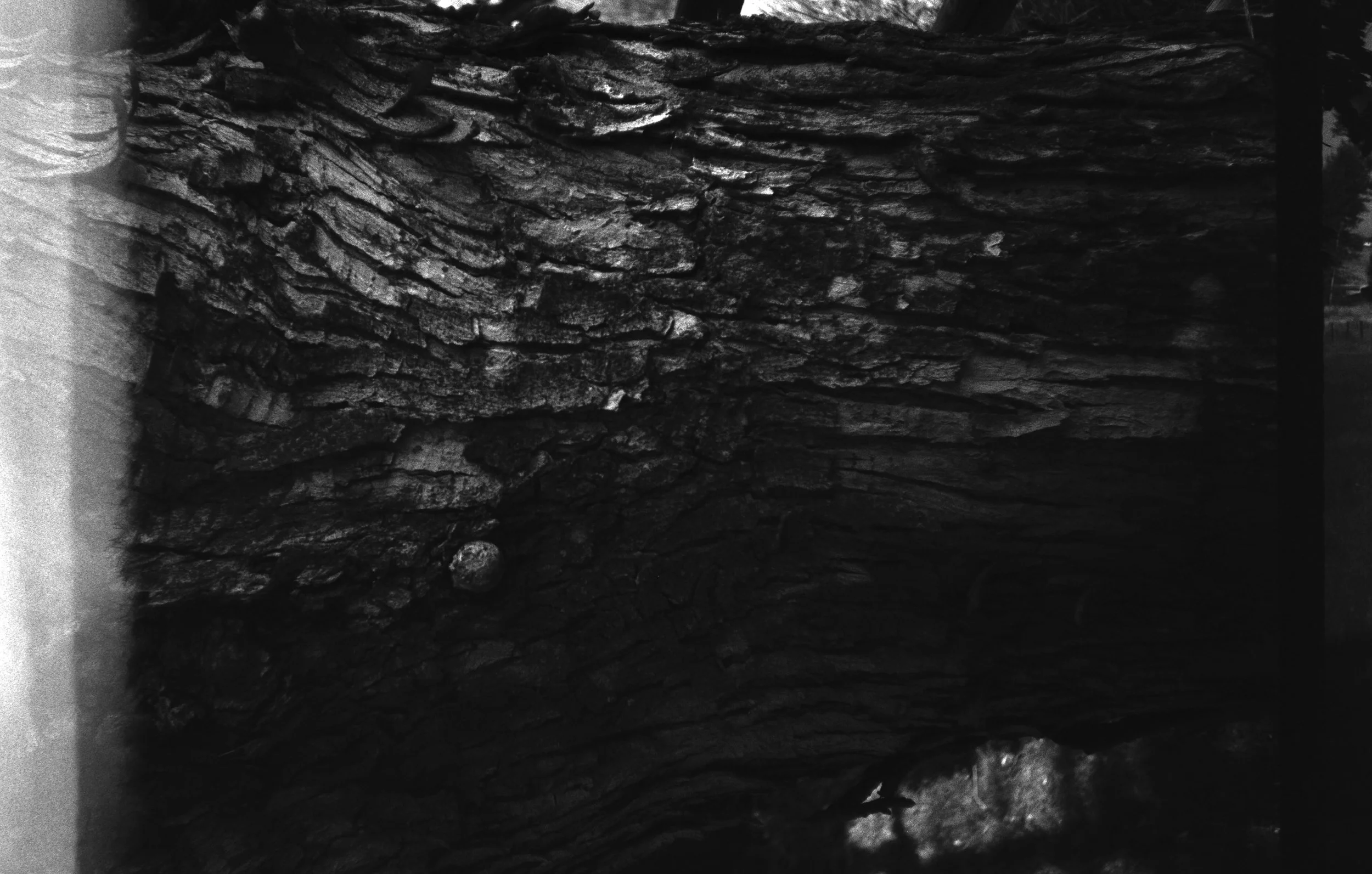
But right at the end of the roll were two frames that worked.
Just two.
And those two photographs gave me enough information—and enough hope—to try again.
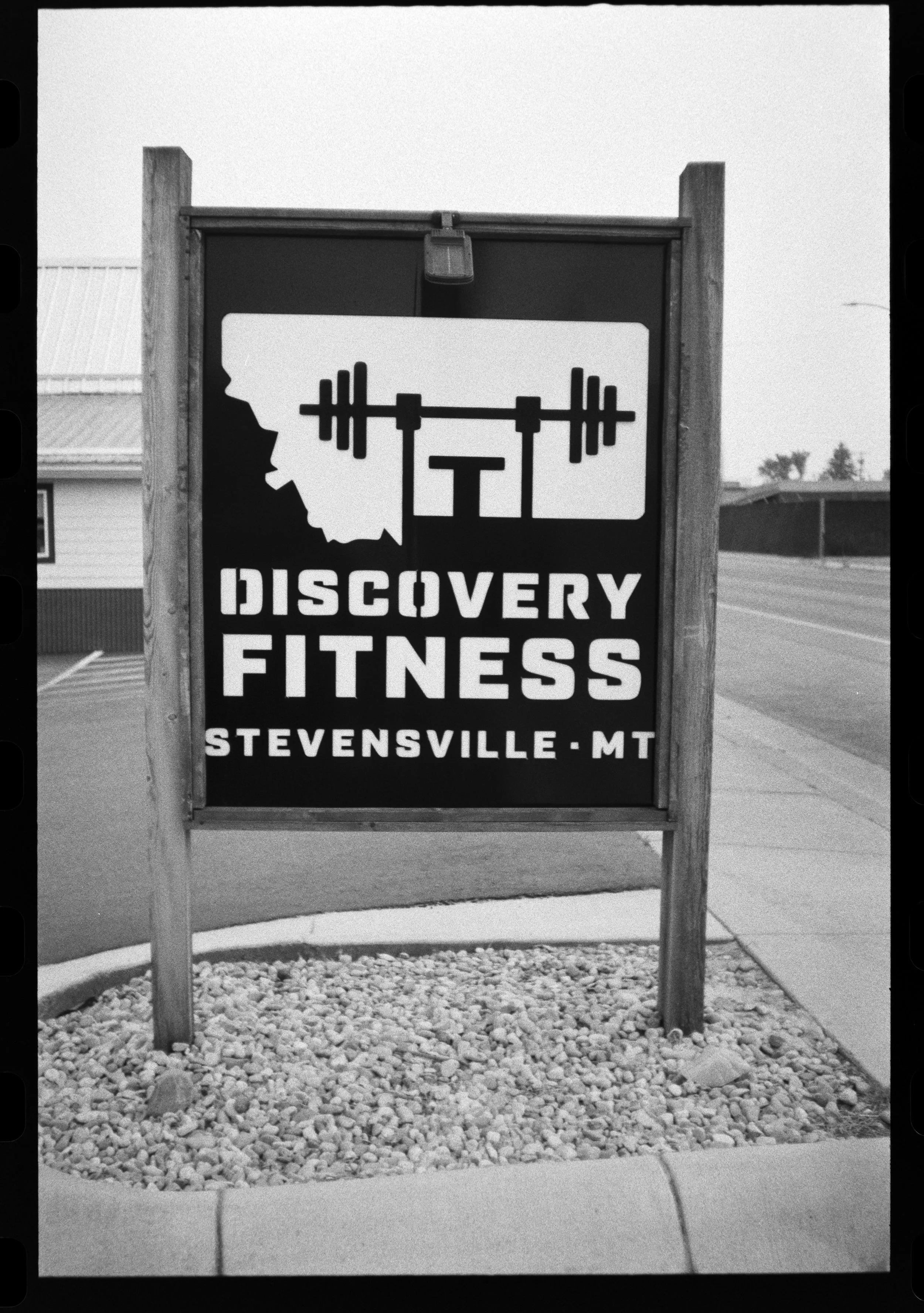
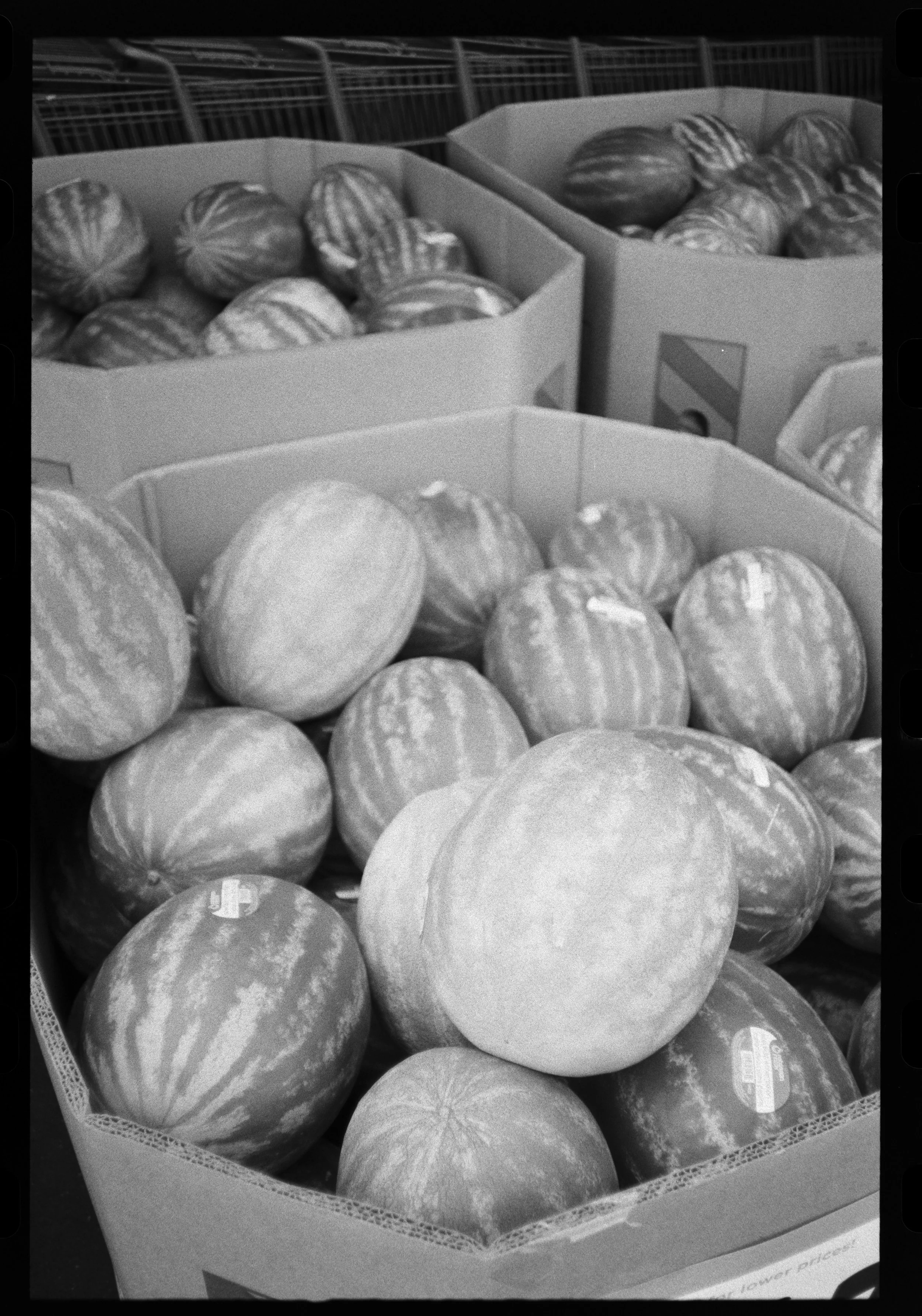
I think it can be embarrassing as a professional photographer to admit that you failed at something. There's an expectation that because you've done this for years, you should know exactly what you're doing.
But that's ridiculous.
Photography is enormous. Cameras are different. Technology changes. Old technology has its own peculiarities. You experiment, make mistakes, learn something new and try again.
Being experienced doesn't mean you're finished learning.
Roll Number Two
Armed with everything I'd learned from my spectacular first-roll failure—and faced with a five-hour layover at Seattle-Tacoma International Airport—I decided it was time for the Chinon to redeem itself.
I loaded it with Ilford HP5, one of my favorite forgiving black-and-white films, and rated it at ISO 800.
This time, I paid attention to those tiny red and green exposure lights.
I kept things simple.
And, perhaps most importantly, I removed the silly hot-shoe cover.
Then I walked around the airport and photographed. I actually incorporated it into a 45min 2.04 mile ruck and photo walk at the airport!
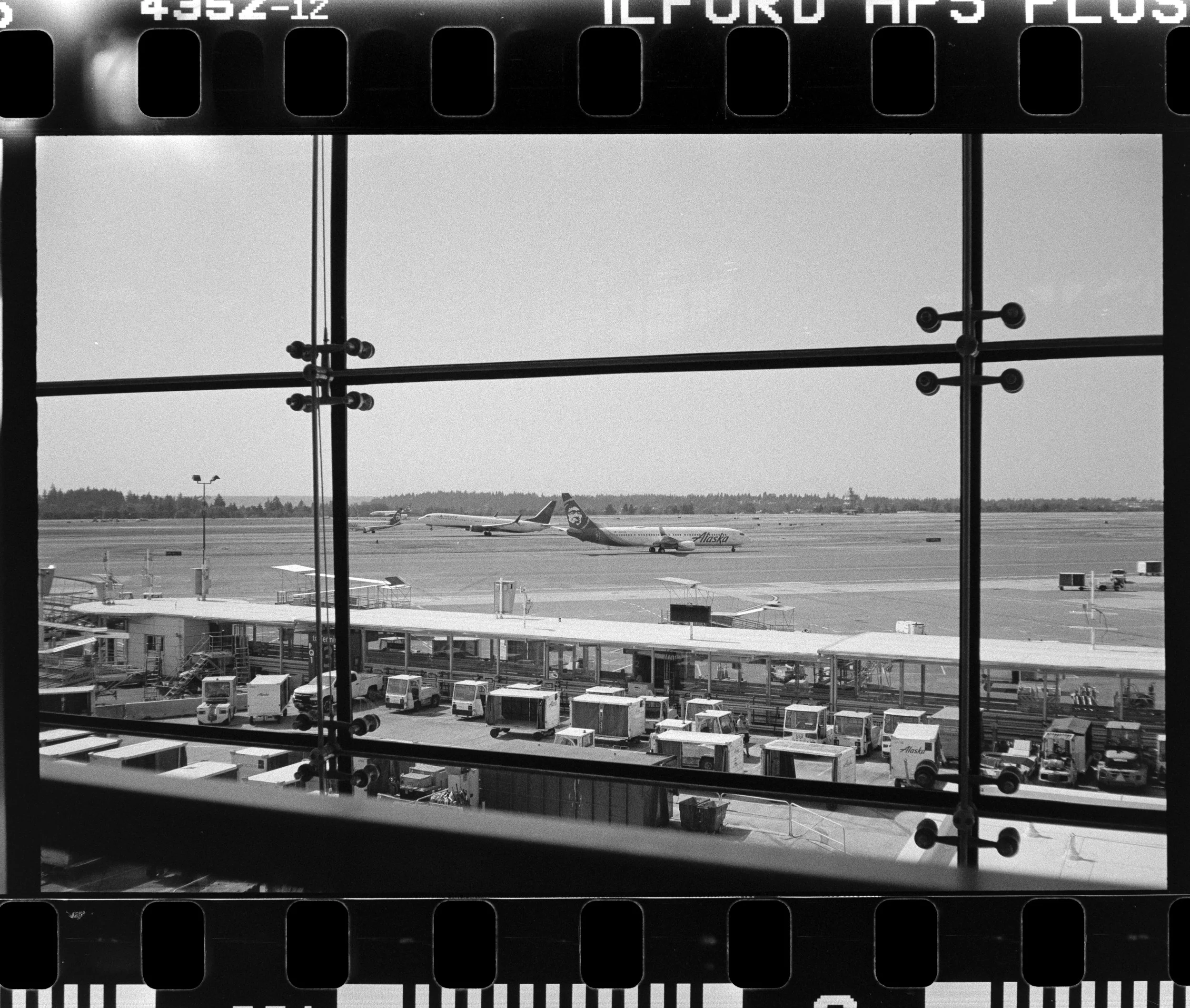
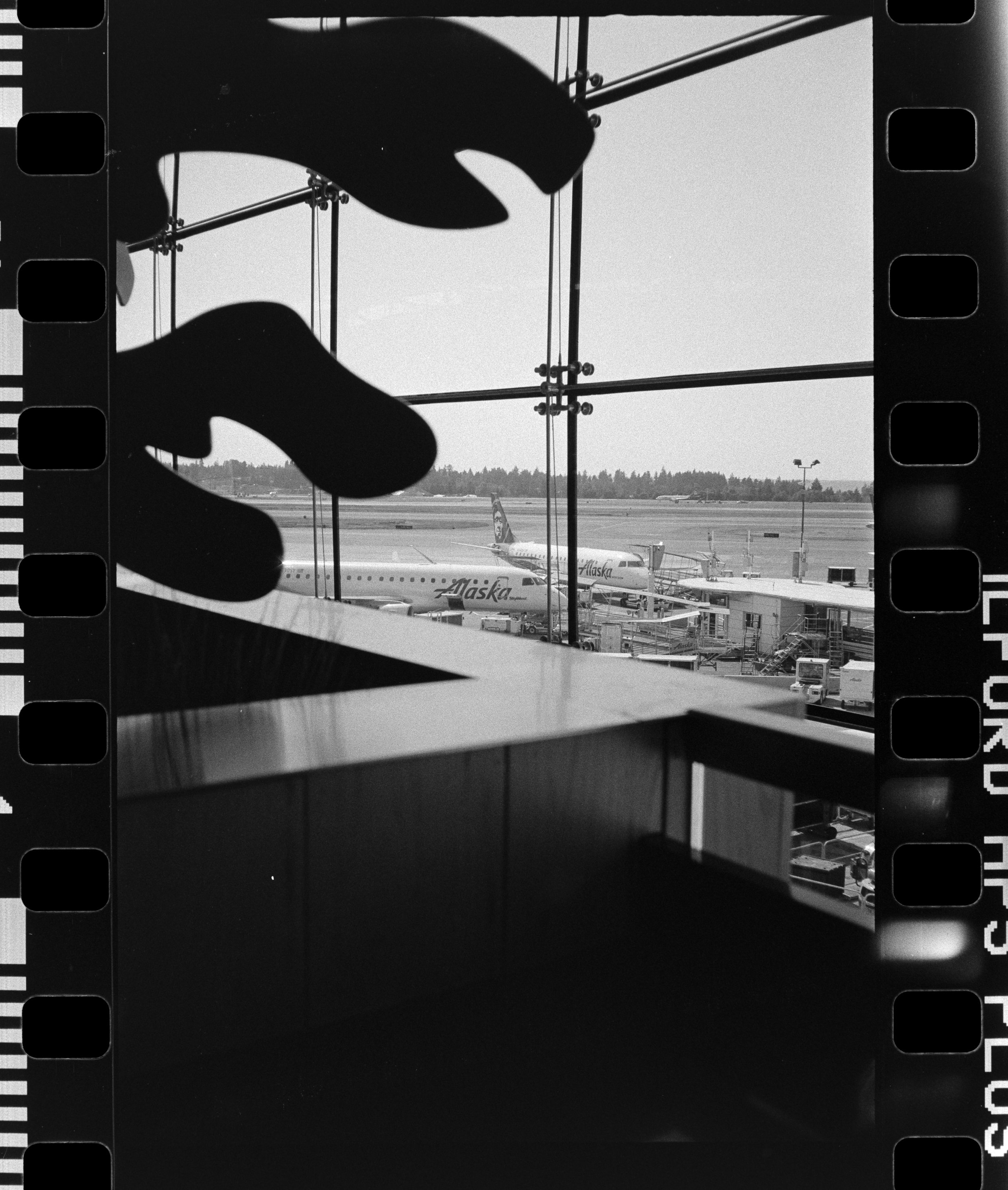
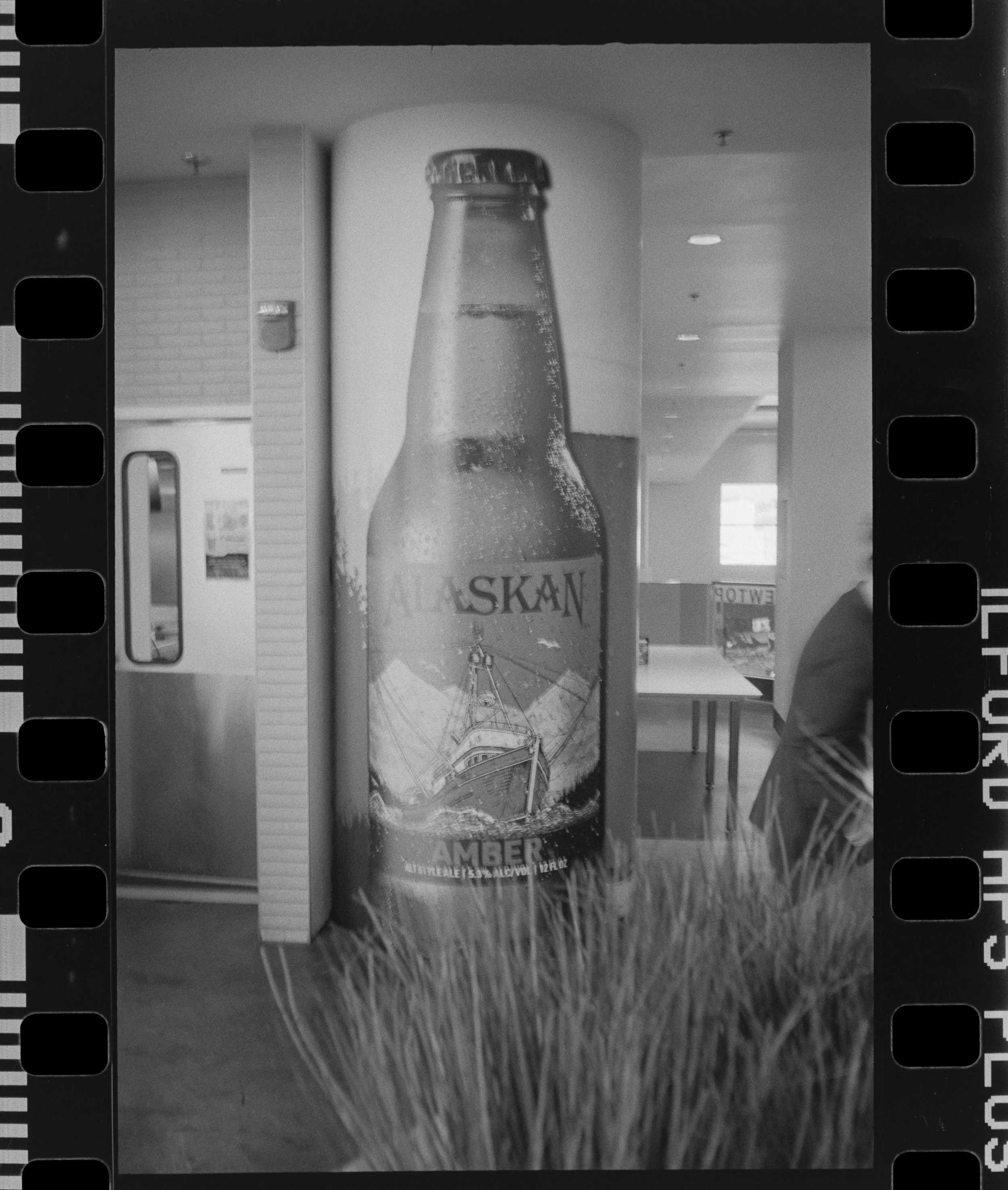
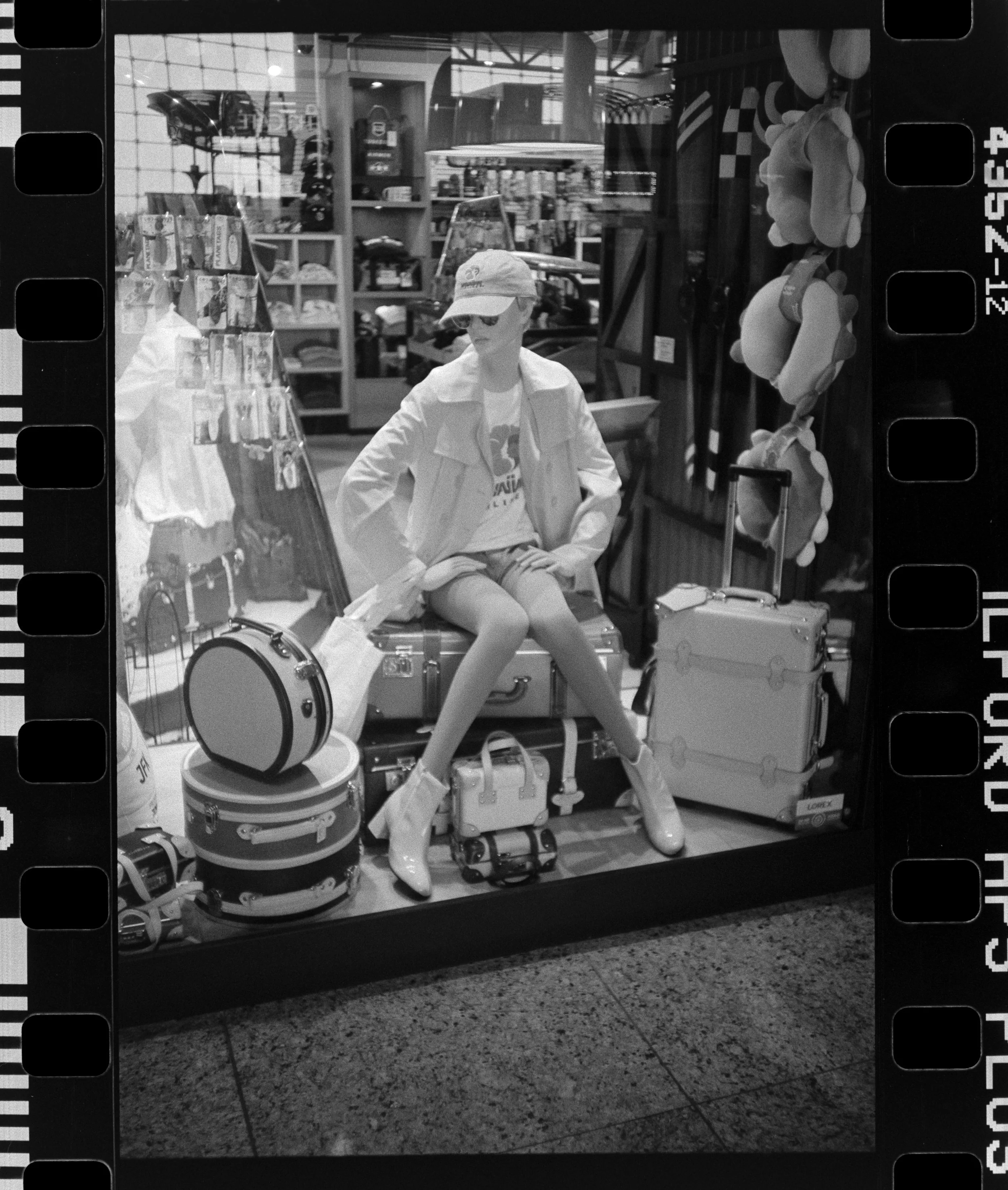
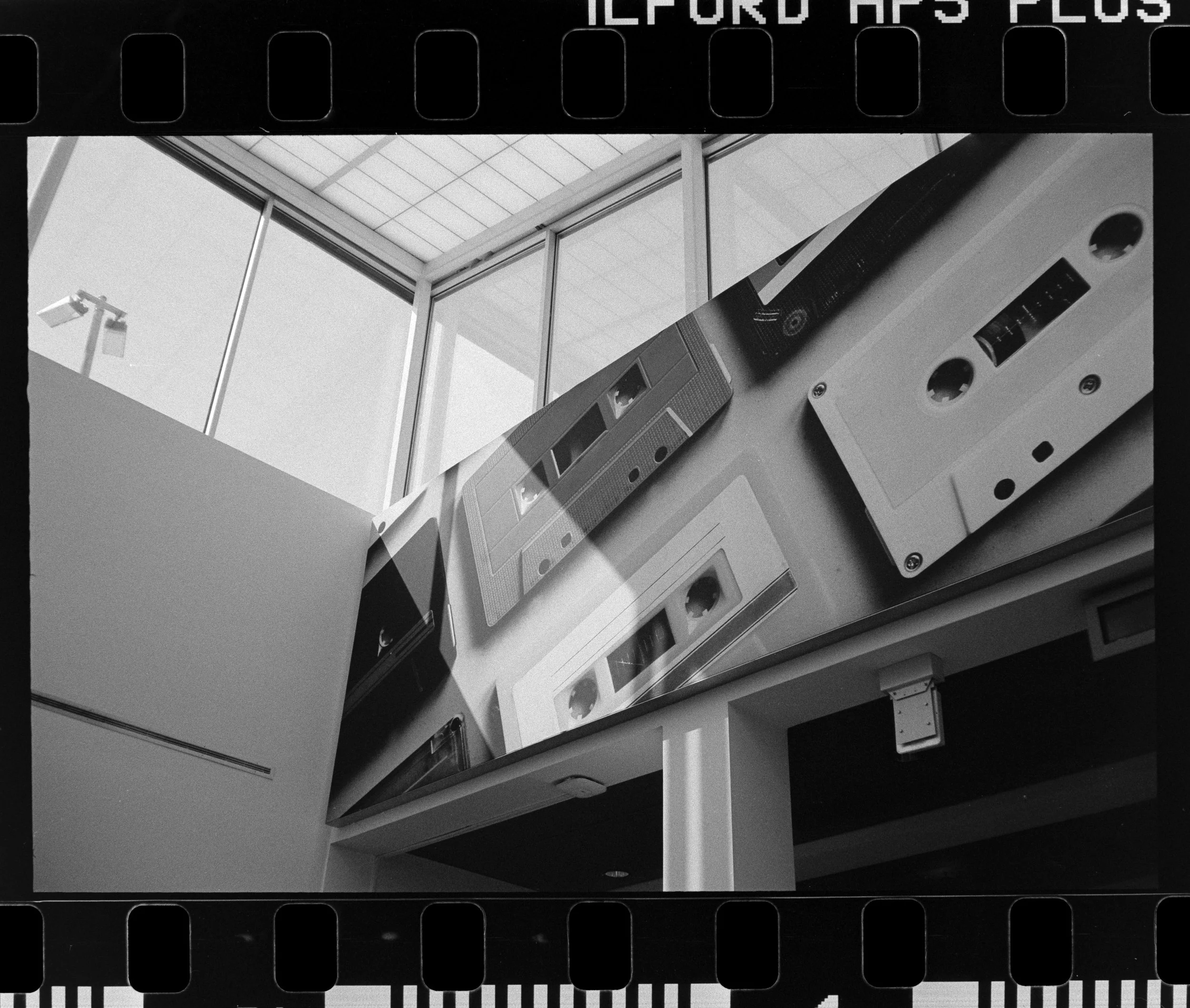
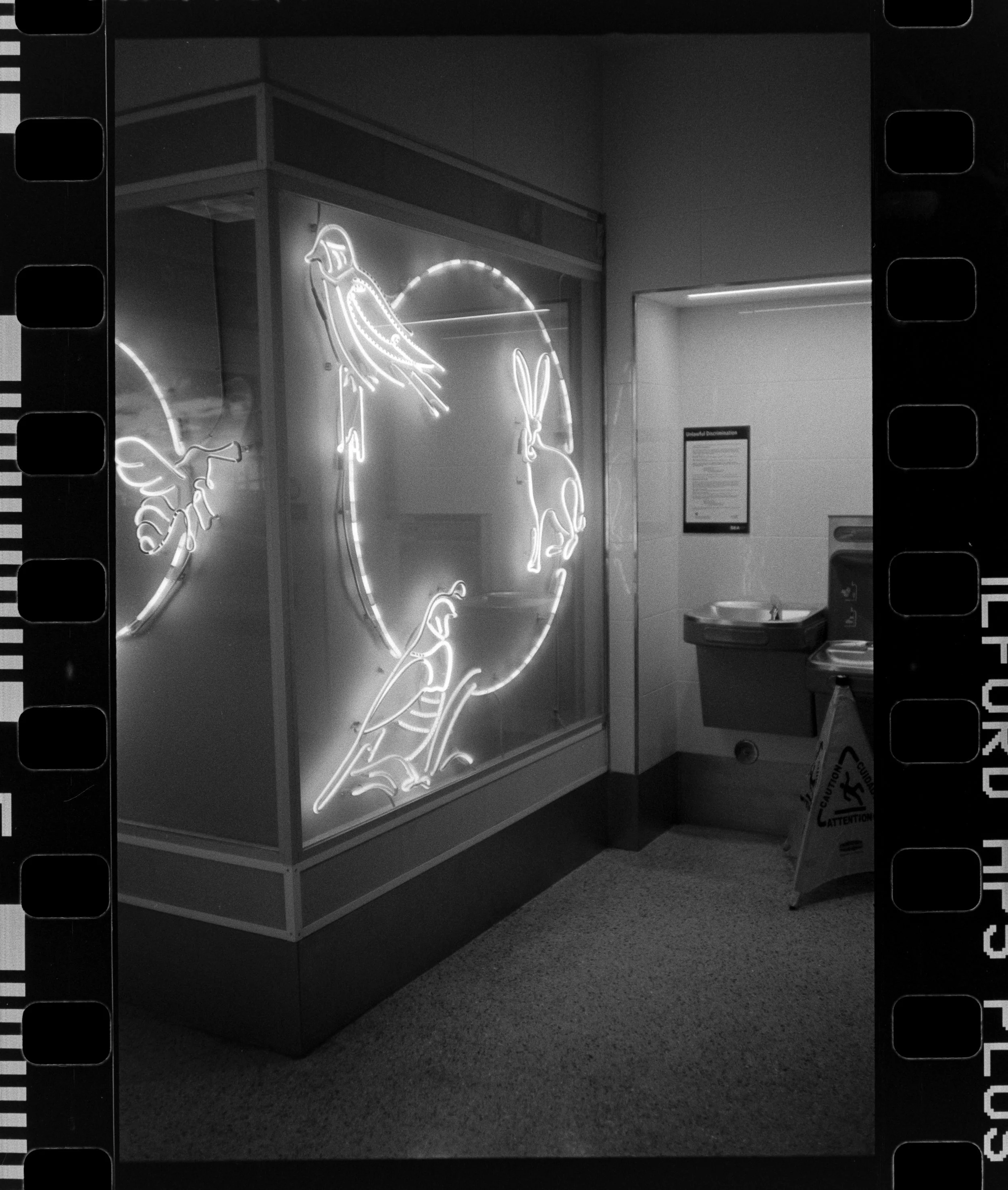
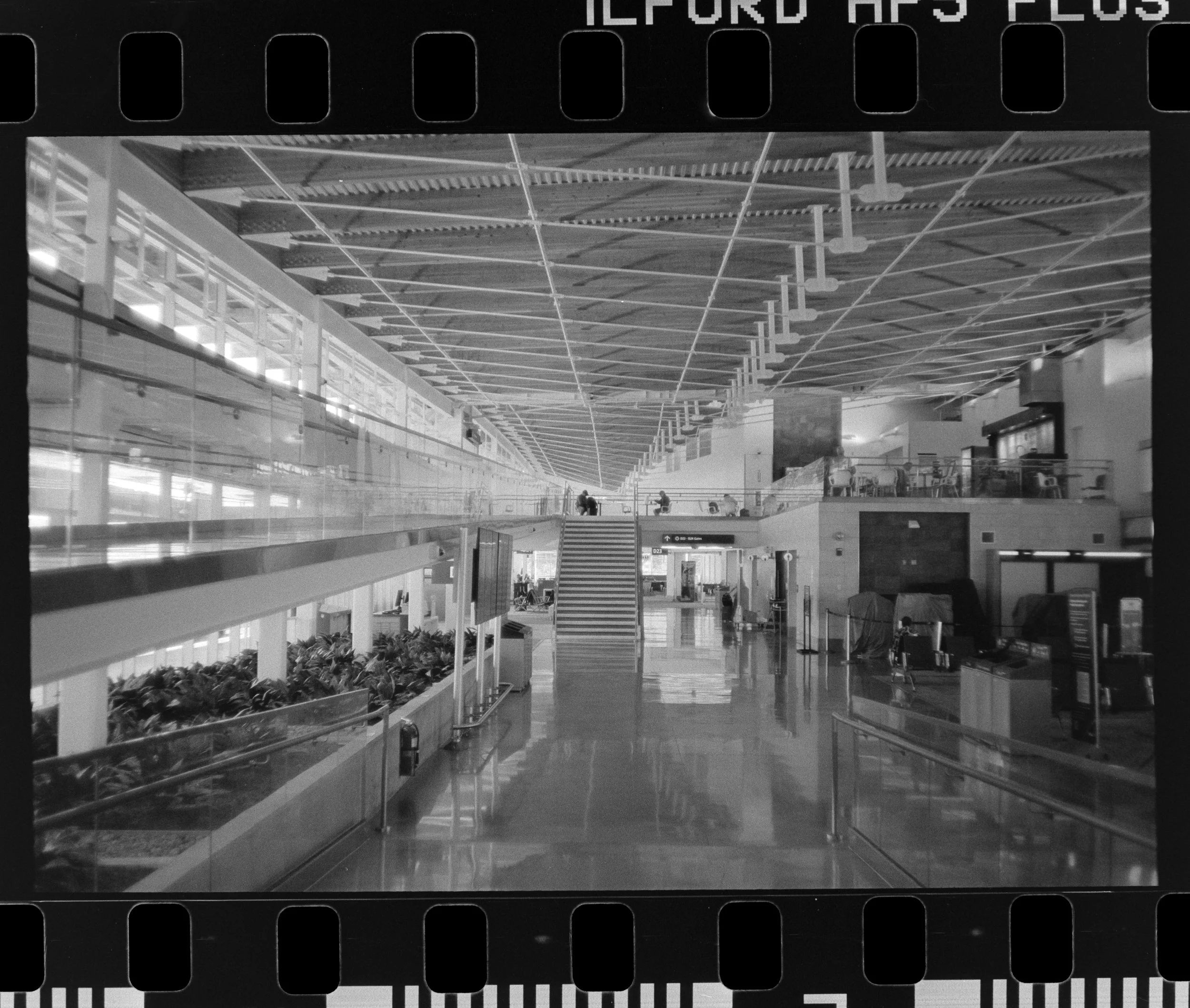
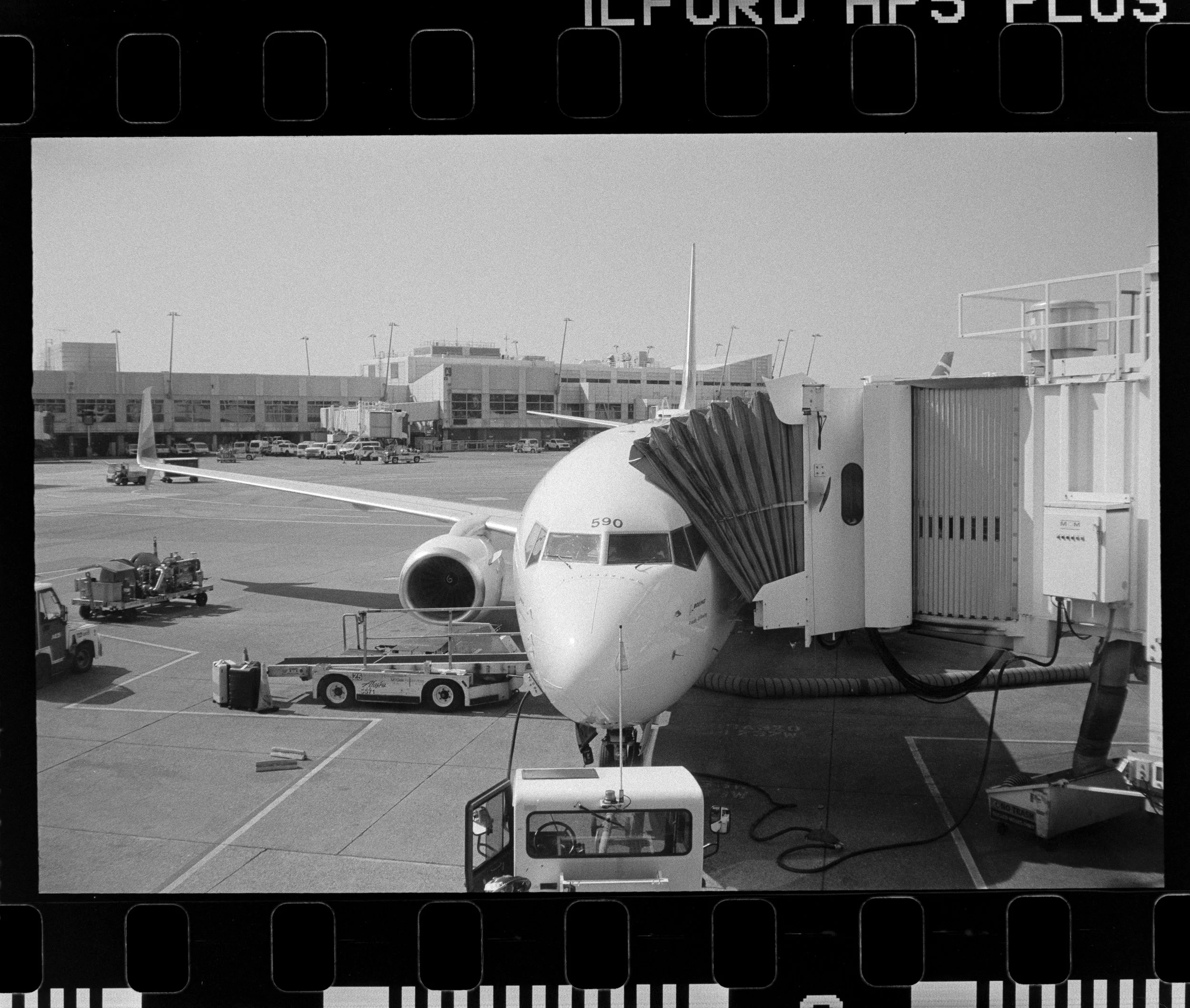
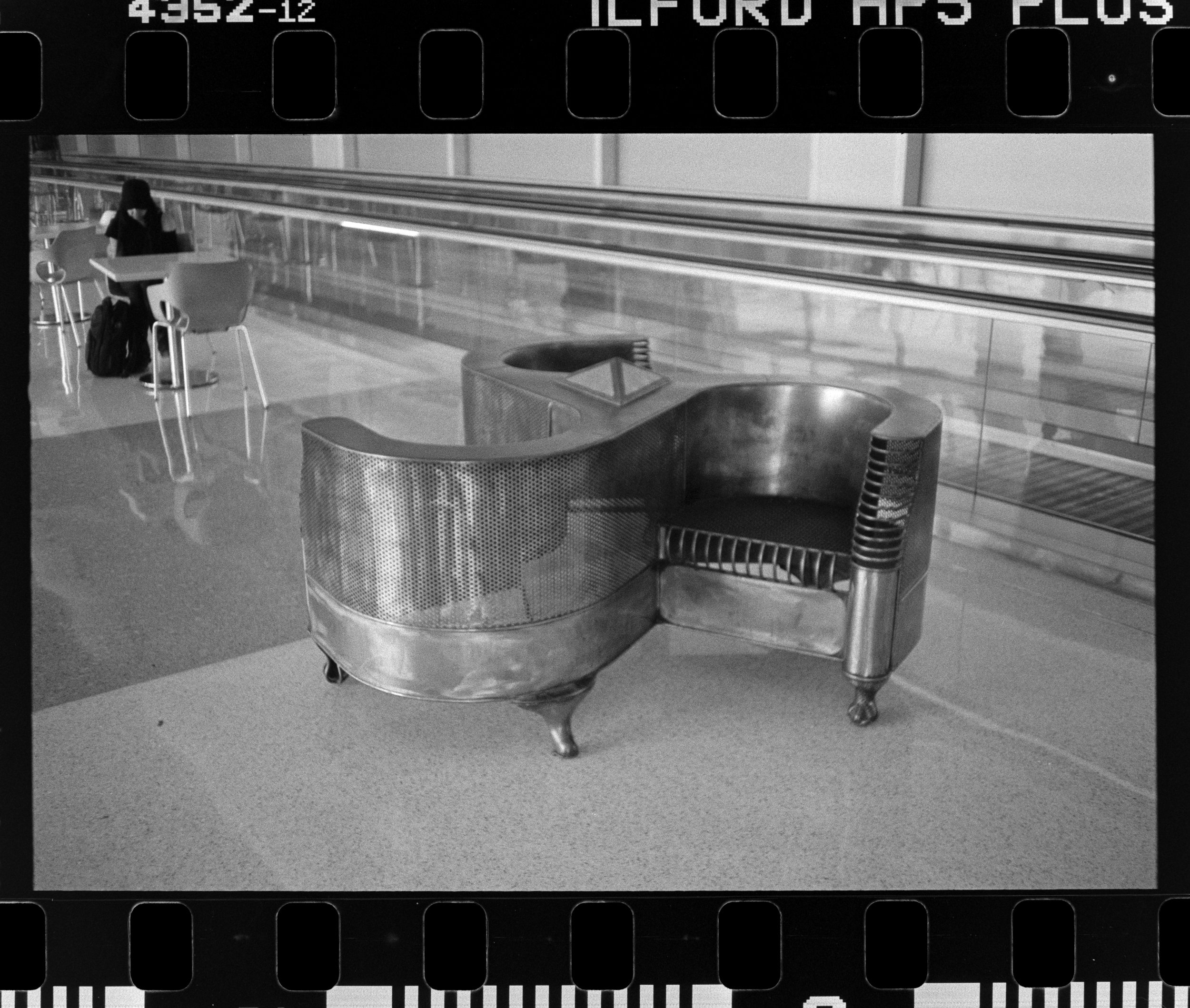
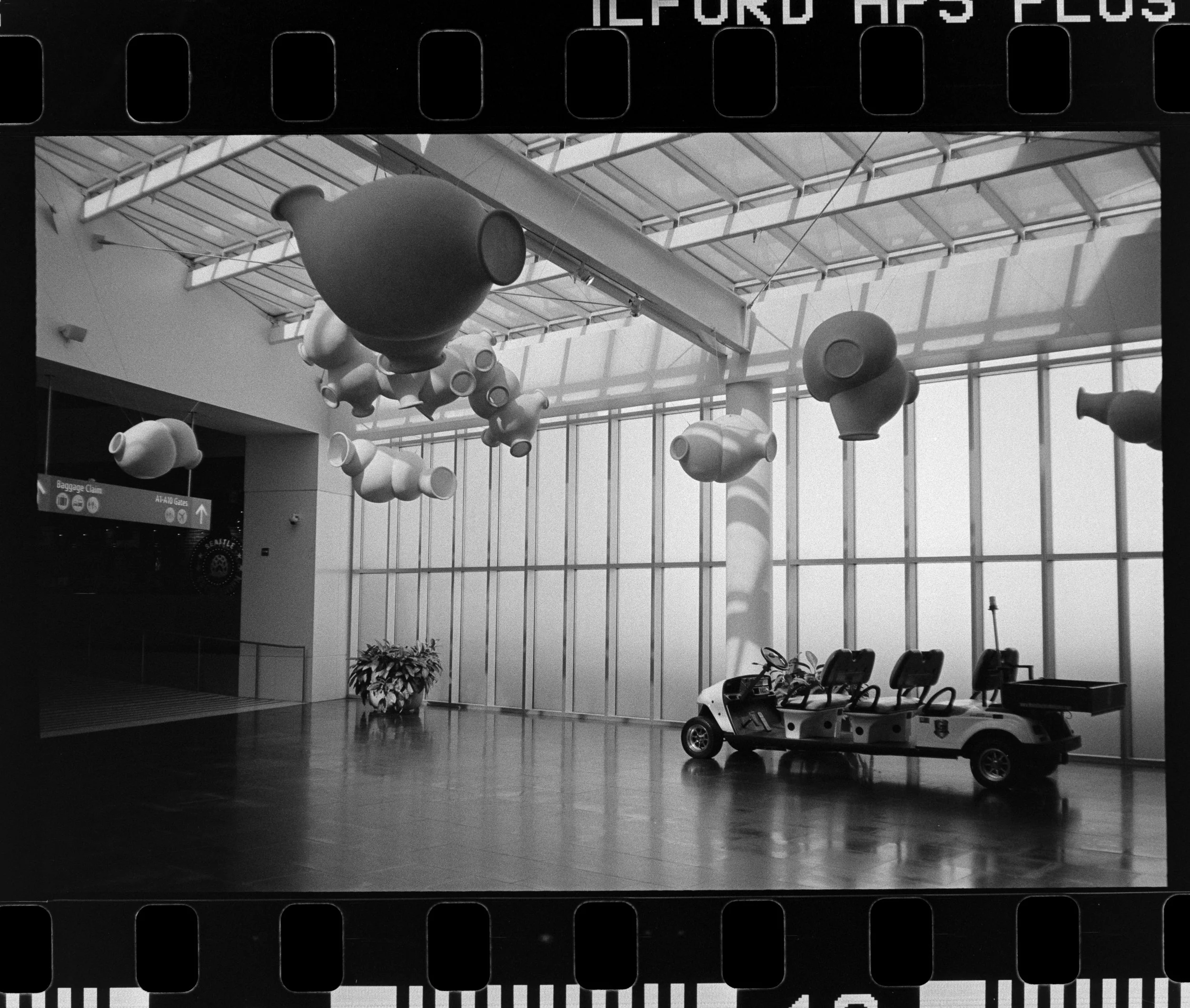
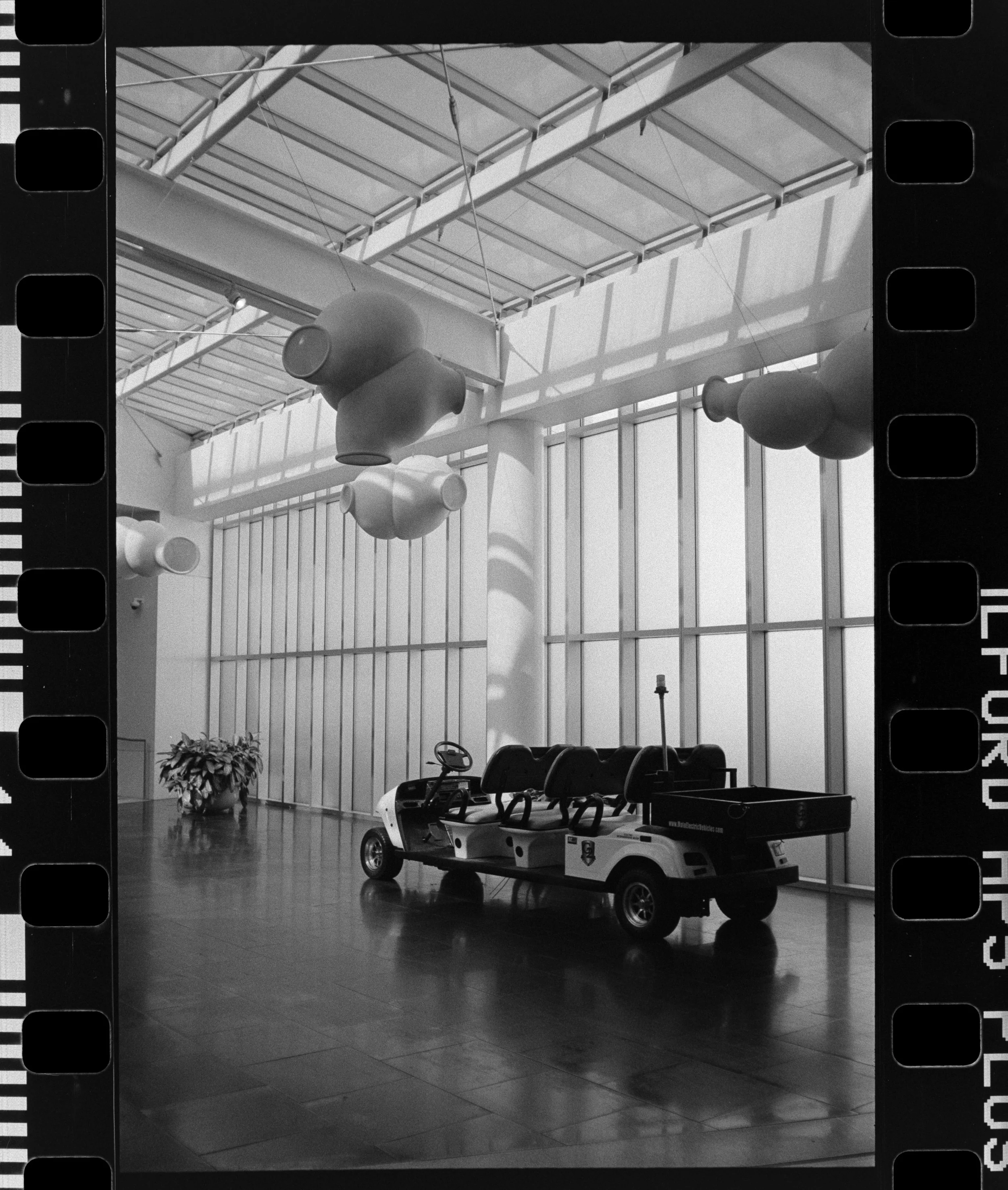
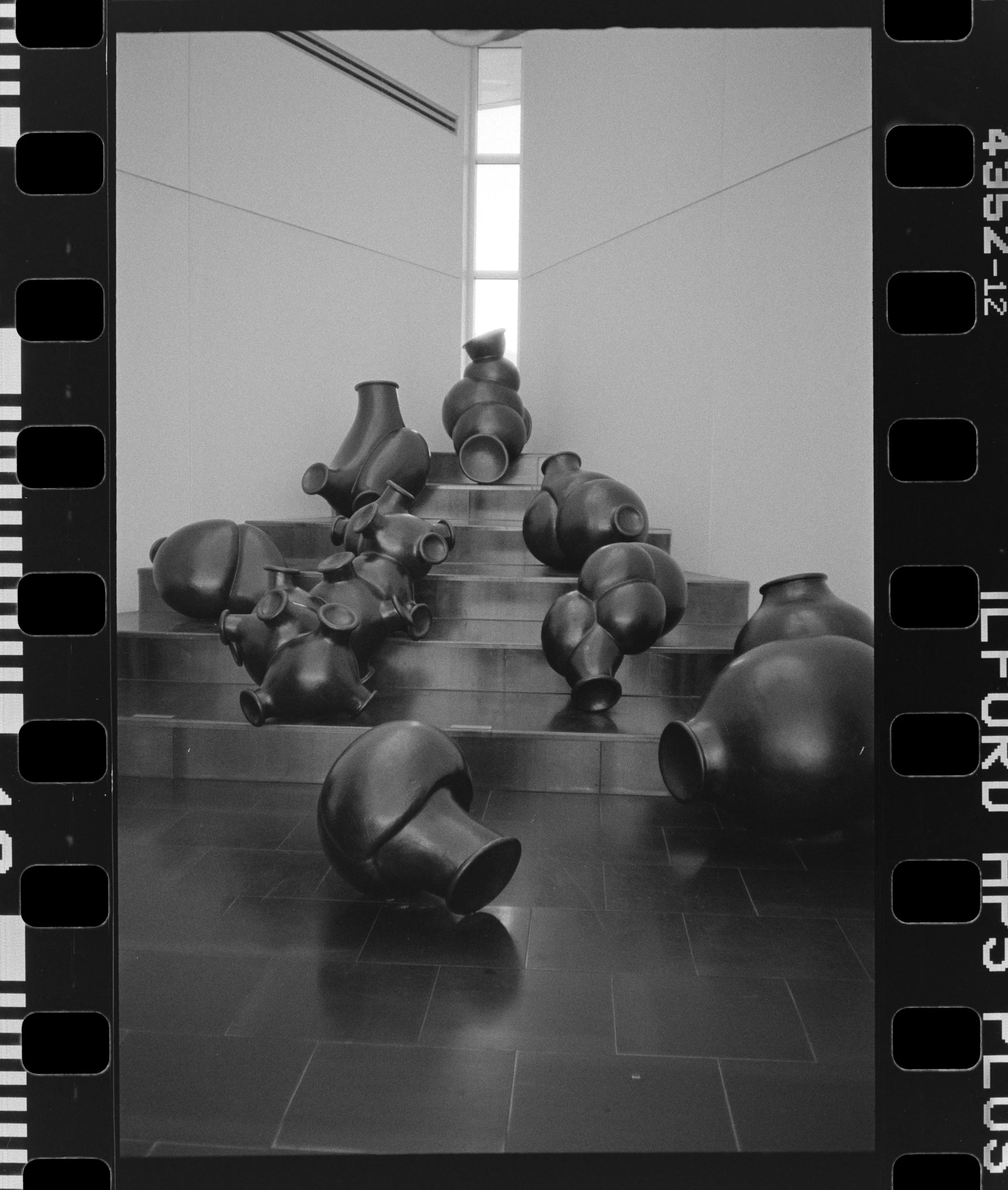
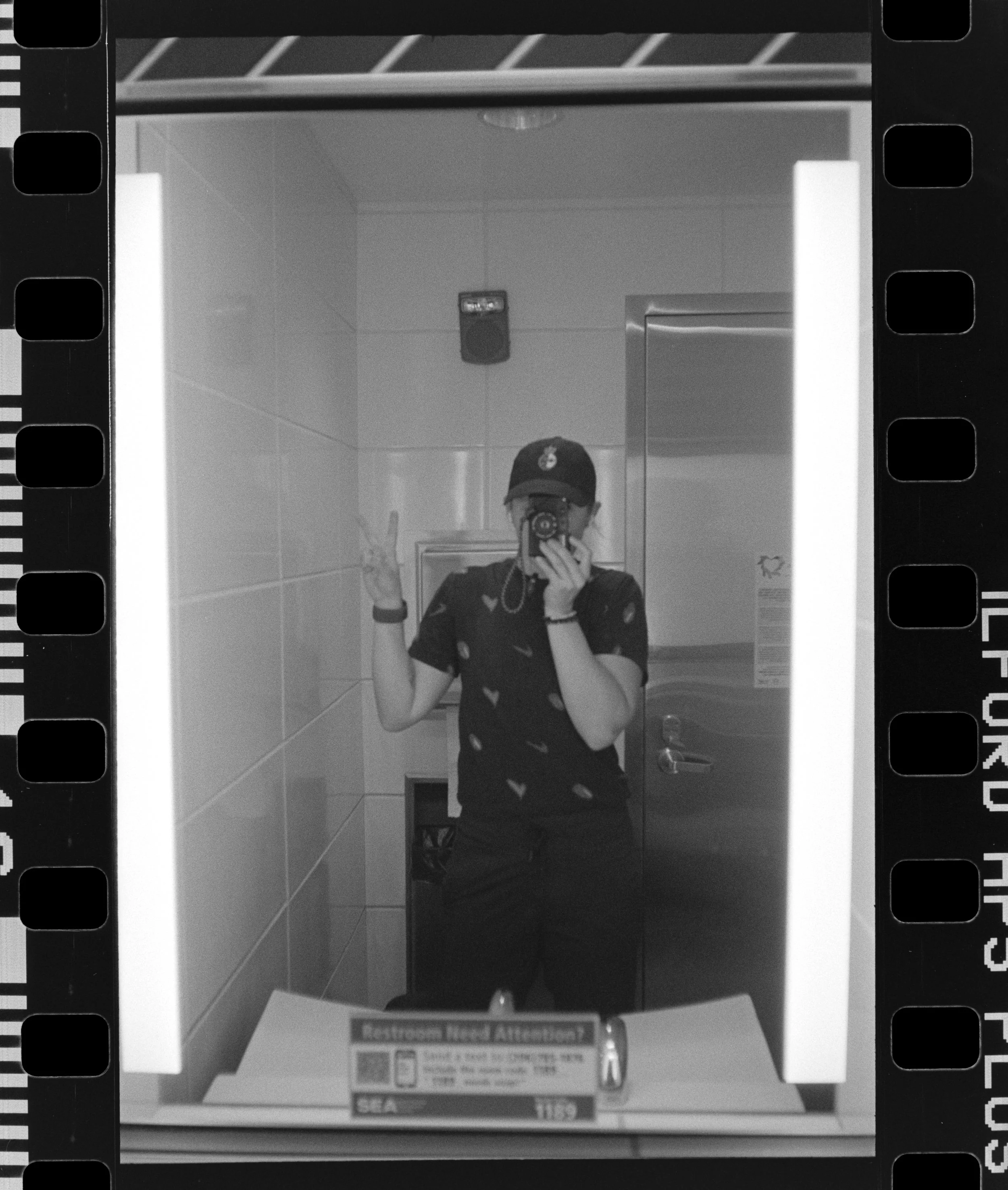


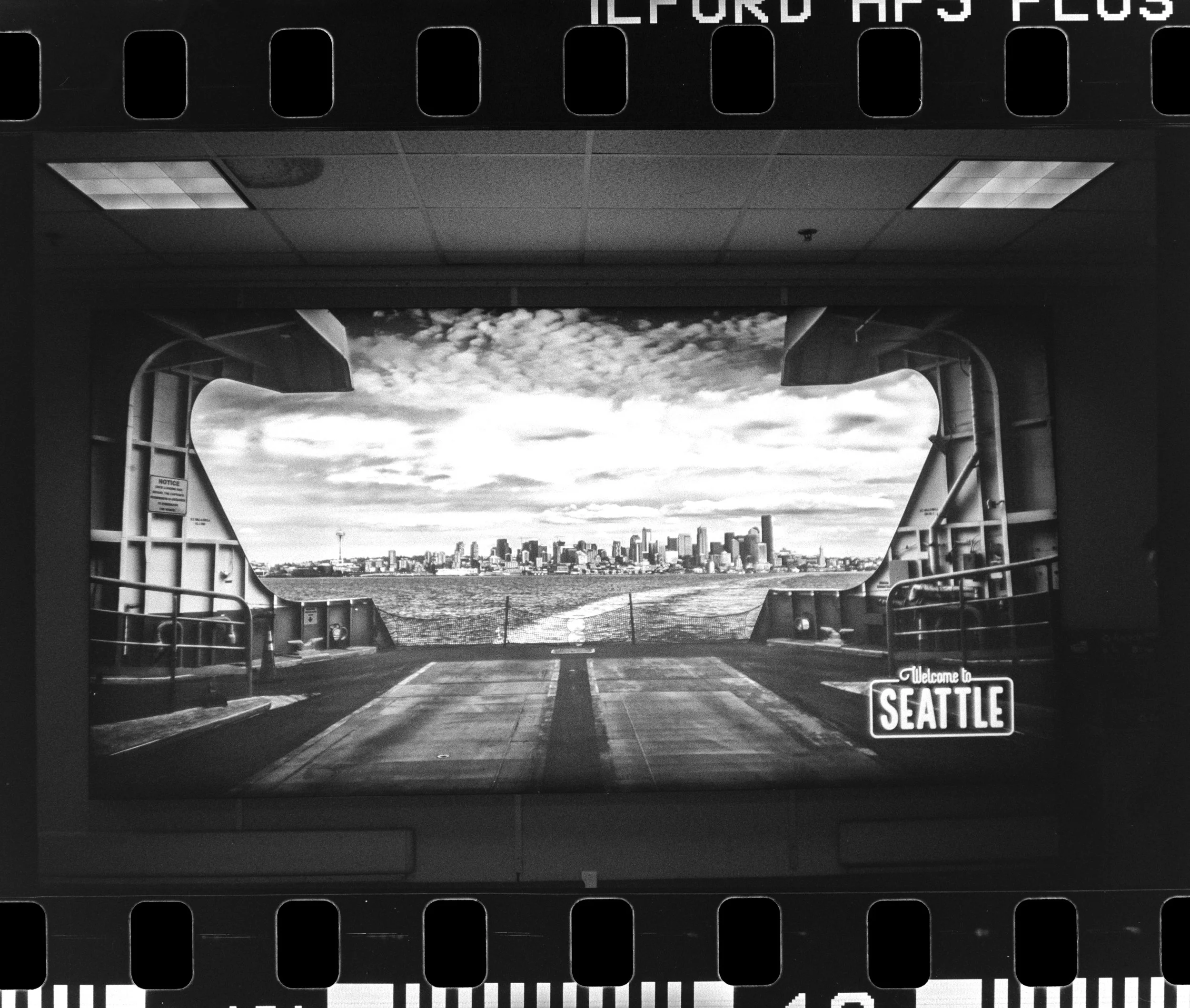
The results?
Fantastic.
Not a single blank or completely black frame on the entire roll.
Are all the photographs "bangers"? Absolutely not.
But that's not really the point.
This little camera—and all the trial and error that came with figuring it out—reminded me of something much more important.
Just keep going.
Don't overcomplicate things.
Take chances on things you don't completely understand yet. Be willing to make mistakes. Be willing to make some genuinely terrible photographs. Figure out what went wrong and load another roll.
After all these years working as a photographer, I still fail. I still misunderstand things. I still occasionally put a hot-shoe cover on a 50-year-old camera and accidentally ruin most of a roll of film.
And I'm okay with that.
Because the moment you decide you already know everything is probably the moment you stop getting better.